
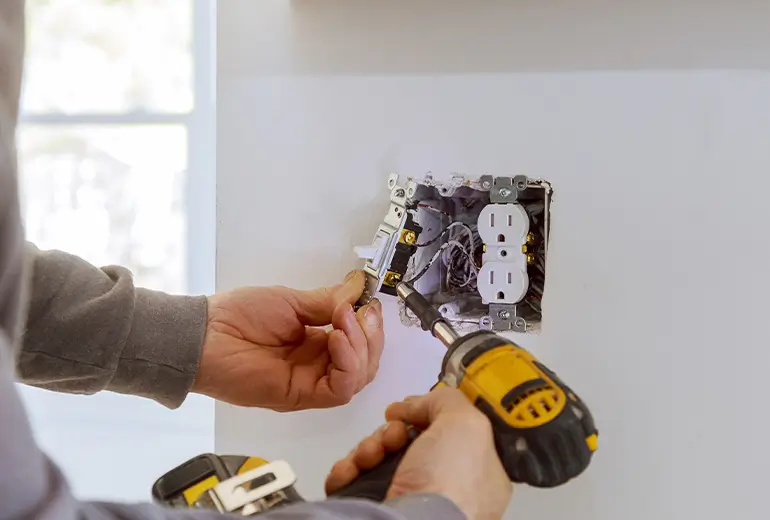
Almost every piece of electronics in our home needs to be plugged into an outlet. Outlets are used daily and are probably one of the most frequently used components in our home or commercial property. The thing is that with frequent use, they should be inspected once in a while to make sure they are safe to use. A bad and outdated outlet will put your whole house at risk. It can cause a fire or, even worse, it can shock and kill someone in your house. This is one of the main reasons we decided to write this blog post: to inform homeowners and business owners about the indicators that tell us when it’s time to call an electrician for an outlet replacement.
1. The Outlet Feels Warm or Hot to the Touch
An outlet should never feel warm when it’s in use. Heat indicates loose wiring, internal wear, or overloading. These conditions increase electrical resistance, which can lead to arcing and, in worst cases, electrical fires.
If you notice consistent warmth—or any signs of heat damage you should replace the outlet ASAP.
2. Burn Marks, Discoloration, or a Burning Smell
Visible scorch marks, discoloration around the faceplate, or a persistent burning odor are clear warning signs. These symptoms often point to internal arcing or short circuits, both of which significantly elevate fire risk.
At this stage, the outlet is no longer functioning safely and should be replaced immediately by a qualified professional.
3. Plugs Feel Loose or Fall Out Easily
Outlets rely on internal contact tension to maintain a secure electrical connection. Over time, repeated use causes these contacts to wear down. When plugs no longer fit snugly, electricity can intermittently disconnect and reconnect, creating sparks and heat.
Loose outlets are a common but underestimated safety issue and are a strong indicator that replacement is necessary.
4. Cracks, Chips, or Physical Damage
Cracked faceplates or damaged outlet bodies expose internal components, increasing the risk of electrical shock—particularly in households with children or pets. Physical damage also suggests the outlet may have suffered internal stress that is not immediately visible.
Even minor damage warrants replacement, as the integrity of the outlet can no longer be assured.
5. Frequent Tripped Breakers or Blown Fuses
If a specific outlet consistently causes a circuit breaker to trip or a fuse to blow, the issue may stem from faulty wiring or a deteriorated outlet. While circuit protection devices are doing their job, repeated interruptions indicate an underlying problem that should be corrected.
Replacing the outlet is often a necessary step in resolving these recurring electrical issues.
6. The Outlet Is Old or Outdated
Many older homes still use two-prong, ungrounded outlets or early-generation three-prong receptacles that no longer meet current electrical standards. These outlets may not safely support modern appliances and electronics.
Upgrading to grounded, tamper-resistant, or GFCI/AFCI outlets (where required) improves safety, compliance, and functionality.
7. GFCI Outlets No Longer Reset or Test Properly
Ground Fault Circuit Interrupter (GFCI) outlets are designed to protect against electric shock, particularly in kitchens, bathrooms, garages, and outdoor areas. If a GFCI outlet fails to reset or does not respond correctly when tested, it can no longer provide adequate protection.
A malfunctioning GFCI outlet should always be replaced, not ignored.
8. Buzzing, Crackling, or Popping Sounds
Audible noises coming from an outlet are never normal. Buzzing or crackling typically indicates loose connections or internal arcing, both of which pose serious hazards.
If you hear unusual sounds, discontinue use of the outlet and arrange for a replacement as soon as possible.
Why Outlet Replacement is Important
Electrical outlet replacement is a relatively small investment compared to the potential cost of property damage, injury, or downtime caused by electrical failure. Modern outlets are designed with improved safety features and are better suited to today’s electrical demands.
Regular replacements reduce risk, improves reliability, and helps ensure compliance with current electrical codes.
Final Ideas
You probably didn’t know about all the risks your outlets can cause but keeping an eye on them daily can save your home from tragic events like fire or shocking someone. One of the easiest indicators that suggests that there’s something wrong with your outlet is if it feels warm, or if the wire you plugged in is also warm while in use. If you see smoke thats a bigger issue and you should call a company for Emergency Electrical Services.