
Most of a remodel that people get excited about — the quartz counters, the freestanding tub, the finished basement bar — sits in front of the drywall. The part that decides whether any of it actually works sits behind it. That’s the wiring. And it’s usually the thing homeowners think about last and pay for first when it goes wrong.
At Cob Services, we’ve been the electrician on remodels across Naperville and the western suburbs for over ten years. Kitchen guts, basement finishes, room additions, the occasional “we opened one wall and found something terrifying.” Here’s a straight look at what a licensed electrician actually does on a renovation, and where the money tends to go.
Get the electrician in before the drywall, not after
The cheapest time to make an electrical decision is during the design conversation. The most expensive time is after the painters have left.
When the walls are open, we can see the bones of the house — the panel capacity, the existing circuits, where the load is already stretched. That’s the window to ask the boring questions that save you later: Where do you actually charge your phone at night? Do you want an outlet inside the bathroom drawer for a hair dryer? Is that new double oven going to share a circuit with the microwave and lose? Move an outlet at the framing stage and it’s a few minutes of work. Move it after the tile is up and you’re paying someone to cut, patch, and repaint.
This planning piece is the part an unlicensed handyman skips, and it’s the part that costs the most to fix.
Panel upgrades: the surprise that isn’t really a surprise
If your home was built before the mid-90s, it probably came with 100-amp service. That panel was sized for the appliances of that decade, not for an induction range, an EV charger in the garage, a finished basement, and a home office running three monitors.
So a fair number of remodels start as a kitchen project and turn into a 200-amp panel upgrade once we run the load calculation. We don’t spring that on you mid-job. Before we quote the remodel, we check the existing service against what the finished space will pull. If a panel upgrade is coming, it’s a separate line on the original estimate so you can see exactly what it costs and decide. A panel that keeps tripping breakers is annoying. A panel that’s genuinely overloaded is a fire risk, which is the real reason this matters.
Lighting: where a remodel either looks finished or doesn’t
You can spend a fortune on countertops, but bad lighting will flatten the whole room anyway. Good lighting on a remodel is layered, and the layers each do a different job.
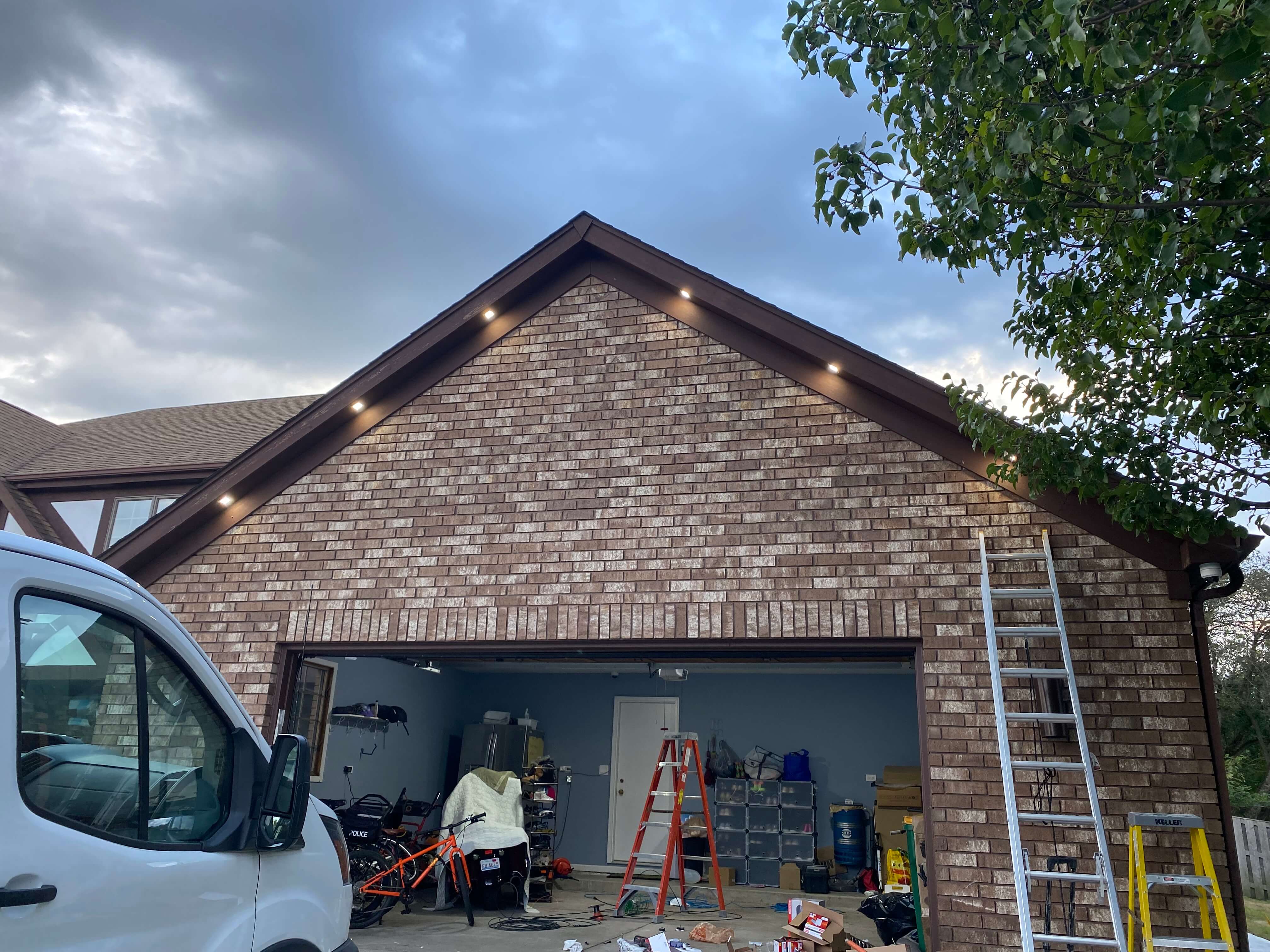
Task lighting is the practical layer — under-cabinet LEDs so you can see the cutting board instead of your own shadow. Accent lighting picks out the things you spent money on, like a backsplash or a piece of art. And ambient lighting, usually recessed cans on a real layout plus dimmers, sets the overall level. The mistake we see most is recessed cans placed by guesswork instead of a plan, which leaves you with dark corners and a hot spot over the sink. Our custom lighting installation work starts with walking the space and laying the plan out before anyone cuts a hole in the ceiling.
What changes room by room
Every room in a remodel has its own electrical personality.
The kitchen is the power-hungry one. New appliances pull more than the originals they replaced, and current code wants GFCI on every counter outlet and AFCI on the rest. We add dedicated circuits for the dishwasher, disposal, microwave, and range so they aren’t fighting each other for power. Island outlets have to meet current code too, which trips up a lot of DIY kitchen jobs.
The bathroom looks small but the code requirements stack up fast. Every outlet is GFCI-protected, because that’s the room where a fault near water is most likely to hurt someone. The exhaust fan has to be sized to the room and vented outside. Vent it into the attic instead and you’ve just built a mold problem into a brand-new ceiling. Heated floors, towel warmers, a steam shower — each one wants its own circuit.
Basements and attics are about turning storage into living space, and that means meeting codes most people have never heard of — egress lighting, interconnected smoke and CO detectors, AFCI protection throughout. An inspector will look hard at all of it.
If the remodel includes EV charging in the garage, that’s its own conversation about circuit capacity and panel load. Our EV charger installation page covers how that ties into the rest of the work.
Why this isn’t the place for DIY
The do-it-yourself instinct runs strong during a remodel, and for plenty of jobs that’s fine. Electrical isn’t one of them.
A licensed electrician brings more than a tool bag. We pull the permit in our contractor name — a homeowner usually can’t pull an electrical permit themselves, and a handyman can’t either. We schedule the rough-in and final inspections around your project timeline. We work to current code, which matters because the 2023 NEC tightened GFCI and AFCI requirements and changed how smoke and CO detectors get interconnected during a remodel. An inspector who finds work done outside of code fails the job, and your whole project sits there while it gets fixed.
If you want to see the code side of this from a neutral source, the Electrical Safety Foundation International keeps a plain-English rundown of the safety devices required when you renovate to code — GFCIs, AFCIs, tamper-resistant receptacles, and surge protection.
Working with us
We’re local. Cob Services is based in Naperville, and we’ve handled remodels for families across Plainfield, Aurora, Downers Grove, and Oakbrook Terrace. The owner walks every estimate and stays the point of contact through final inspection, so there’s no hand-off to a subcontractor you never met. We’re licensed and insured in Illinois — License #26-00032356 — and we do both residential and commercial remodel work.
Whether it’s moving a single outlet or wiring a full home addition, you can get a free estimate and we’ll tell you what the job actually involves before any work starts.