
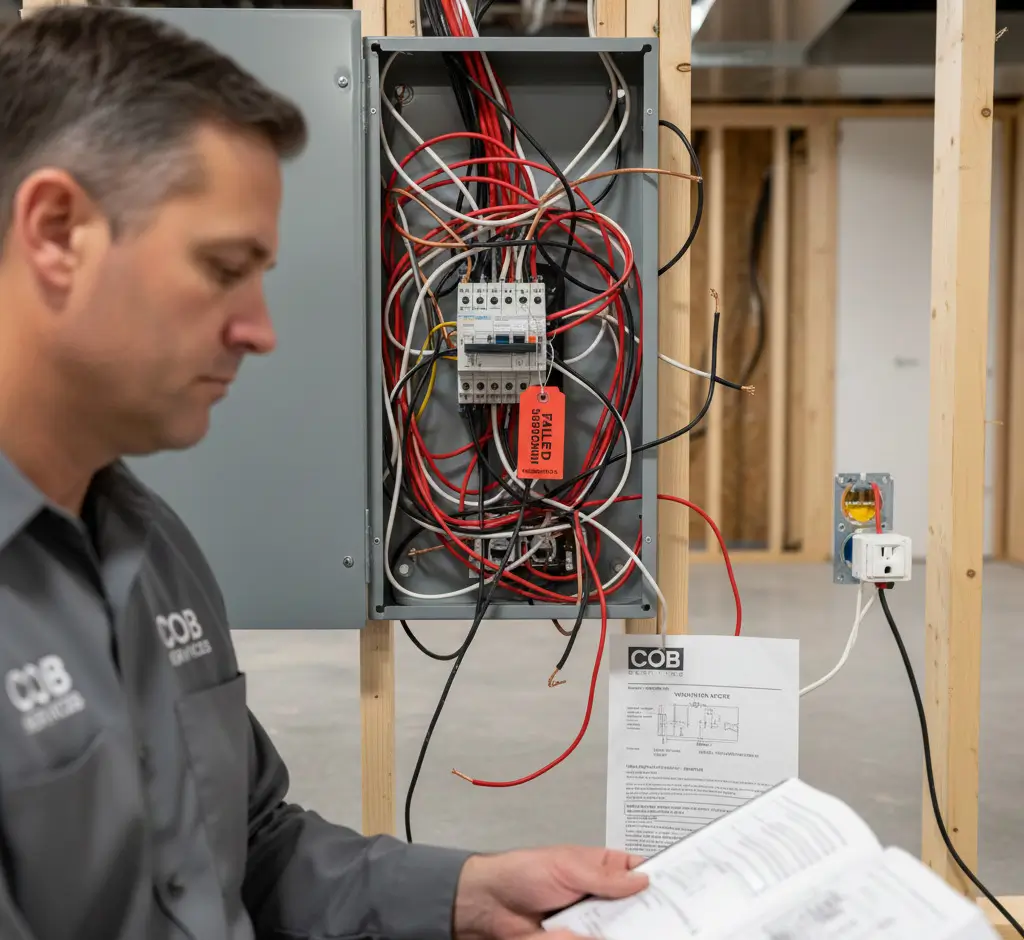
We get it—the “Do It Yourself” spirit is strong in Naperville. With a quick trip to the hardware store and a YouTube tutorial, it’s tempting to think you can rewire that basement or add a new circuit to the garage yourself.
However, there is a massive gap between “making the light turn on” and “meeting Naperville city code.” At Cob Services, we often get calls from frustrated homeowners who are trying to sell their house or finalize a permit, only to have a city inspector hand them a “failed” notice.
Here is why those DIY projects usually hit a wall during the inspection process.
1. The GFCI and AFCI Oversight
Most DIYers know about GFCI (Ground Fault Circuit Interrupter) outlets for bathrooms, but Naperville inspectors are sticklers for the latest National Electrical Code (NEC) updates regarding AFCI (Arc Fault Circuit Interrupter) breakers. These are designed to detect dangerous sparking before a fire starts. If you haven’t swapped in the right breakers for bedrooms or living areas, you’ll fail before the inspector even puts down their clipboard.
2. Improper Grounding and Bonding
This is the most common technical error we see. Electricity always seeks the path of least resistance. If your grounding system isn’t perfectly installed—specifically how it bonds to your home’s metal piping or the grounding rod—it poses a massive safety risk. Inspectors check this thoroughly because a mistake here can lead to energized pipes or appliances.
3. Box Crowding (Volume Fill)
It sounds minor, but the number of wires you can tuck into a single plastic or metal box is strictly regulated. This is known as “Volume Fill.” Shoving too many wires into a small space leads to heat buildup and damaged insulation. If an inspector sees a “stuffed” box, they’ll flag it immediately as a fire hazard.
4. Incorrect Wire Gauge for the Breaker
Using a wire that is too thin for the amount of current (Amps) the breaker allows is a recipe for disaster.
- 15-Amp Circuit: Requires 14-gauge wire.
- 20-Amp Circuit: Requires 12-gauge wire. Using 14-gauge wire on a 20-amp circuit is a common DIY mistake that will never pass a Naperville inspection.
The Cost of “Saving Money”
When a DIY project fails inspection, the “savings” evaporate. You often have to:
- Pay for a re-inspection fee.
- Tear out drywall to fix hidden wiring errors.
- Hire a professional anyway to bring everything up to code.
The Cob Services Standard: We don’t just aim for “working” electricity; we aim for “Code Compliant” excellence. Our team of electricians in Naperville, IL stays updated on every specific amendment to the NEC so your project passes the first time, every time.