
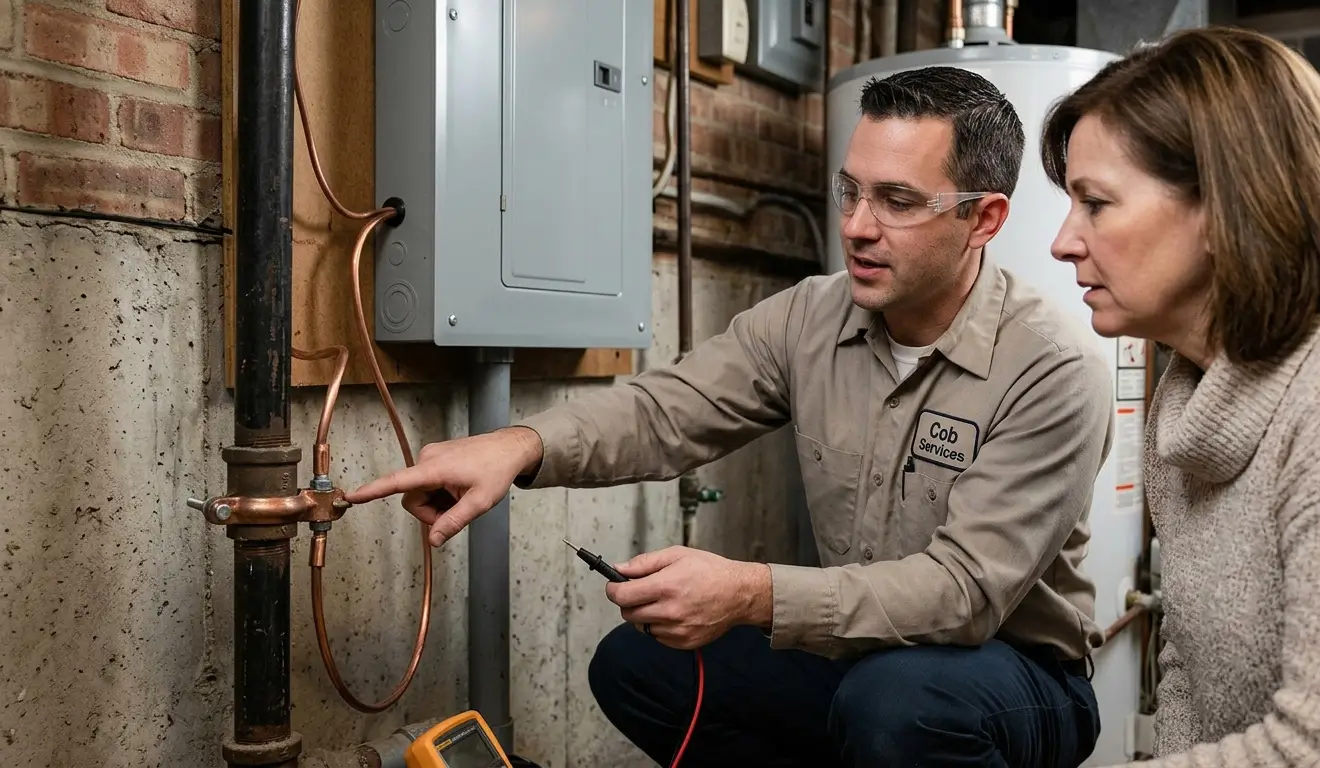
If you live in Naperville, Wheaton, or anywhere in the Western Burbs, you probably spend more time worrying about your property taxes or the next snowstorm than you do about your electrical grounding. And honestly? That’s how it should be. Grounding is designed to be the silent backup singer of your home—it’s only there to make sure the lead performer (your electricity) doesn’t go off the rails.
But here’s the thing: when grounding fails, it’s not just a minor inconvenience. It’s a safety “emergency brake” that’s been cut.
So, what is it actually doing?
Think of electricity like a restless teenager. It’s always looking for the easiest, fastest way to get to the ground. In a perfect world, it stays inside the copper wires of your toaster or your TV. But wires fray, insulation gets old, and sometimes things just glitch.
When that happens, electricity looks for a shortcut. Without proper grounding, that shortcut could be your kitchen faucet, your expensive new laptop, or—in the worst-case scenario—you. A grounding system is essentially a “safety lane” that catches that stray electricity and dumps it deep into the dirt outside your house before it can do any damage.
The “Modern Home” Problem
Back in the day, a house just needed to power a few lightbulbs and a radio. Today? We’re plugging in $1,000 iPhones, sensitive smart-home hubs, and high-end EV chargers.
Modern electronics are incredibly “picky” about power. They need a stable reference point to work correctly. If your grounding is weak, you’ll start seeing weird stuff:
- Your smart fridge screen glitches for no reason.
- Your Wi-Fi router needs a reboot every three days.
- Your surge protectors show a “Site Wiring Fault” light (which most people ignore until it’s too late).
The “Older Home” Reality Check
We have some beautiful older homes in the Aurora and Downers Grove areas. The problem is that many of them were built before “grounding” was a strict requirement.
We often see homes where someone “upgraded” an old two-prong outlet to a three-prong one just so they could plug in their vacuum, but they never actually ran a ground wire back to the panel. It looks safe, but it’s a total illusion. It’s like wearing a seatbelt that isn’t actually bolted to the car frame. It feels fine until the moment you actually need it.
Warning Signs (The “Tingle” Factor)
Your house will usually try to tell you if the grounding is failing. Have you ever touched a metal appliance—maybe the stove or a toaster—and felt a tiny, static-like “tingle”? Most people shrug it off as dry air or carpet static.
Don’t. That tingle is often a sign that electricity is “leaking” and looking for a way out. It’s a warning shot.
We’re Neighbors, Not Just Electricians
At Cob Services, we’ve seen everything from perfectly preserved vintage wiring to “DIY disasters” that are accidents waiting to happen. Grounding isn’t just a wire; it’s a system of connections involving your pipes, your service panel, and the literal earth beneath your foundation.
If you’re worried your home might be operating without its safety net, let’s take a look. We offer a complimentary whole-home safety inspection for homeowners throughout the Western Suburbs. We’ll crawl through the crawlspaces and check the panel so you can go back to worrying about more important things—like where you’re going for dinner tonight.
When you need a licensed electrician, call us. We specialize in Remodeling & Renovations Electrical Services, room additions, rewires, breakers & fuses, plugs, receptacles, switches, ceiling fans, and new construction — serving Hinsdale, Downers Grove, La Grange, and the surrounding areas.