
By Alexandr Godonoaga, Owner & CEO, Cob Services LLC | Licensed & Insured Electrician, Illinois License #26-00032356 | Serving Naperville and DuPage County
Every January my phone starts ringing with the same problem. A homeowner in Naperville notices a brown stain spreading across a bedroom ceiling, or an icicle the size of a baseball bat hanging off the gutter, and they want to know if roof heating cables will fix it. Short answer: sometimes. They are a real tool, and I install them. But I have also pulled failed, melted, and pointless cable off plenty of roofs, so I am not going to pretend they are magic. Here is the honest version of what they do well, where they fall short, and how to decide if they belong on your house.
What roof heating cables actually do
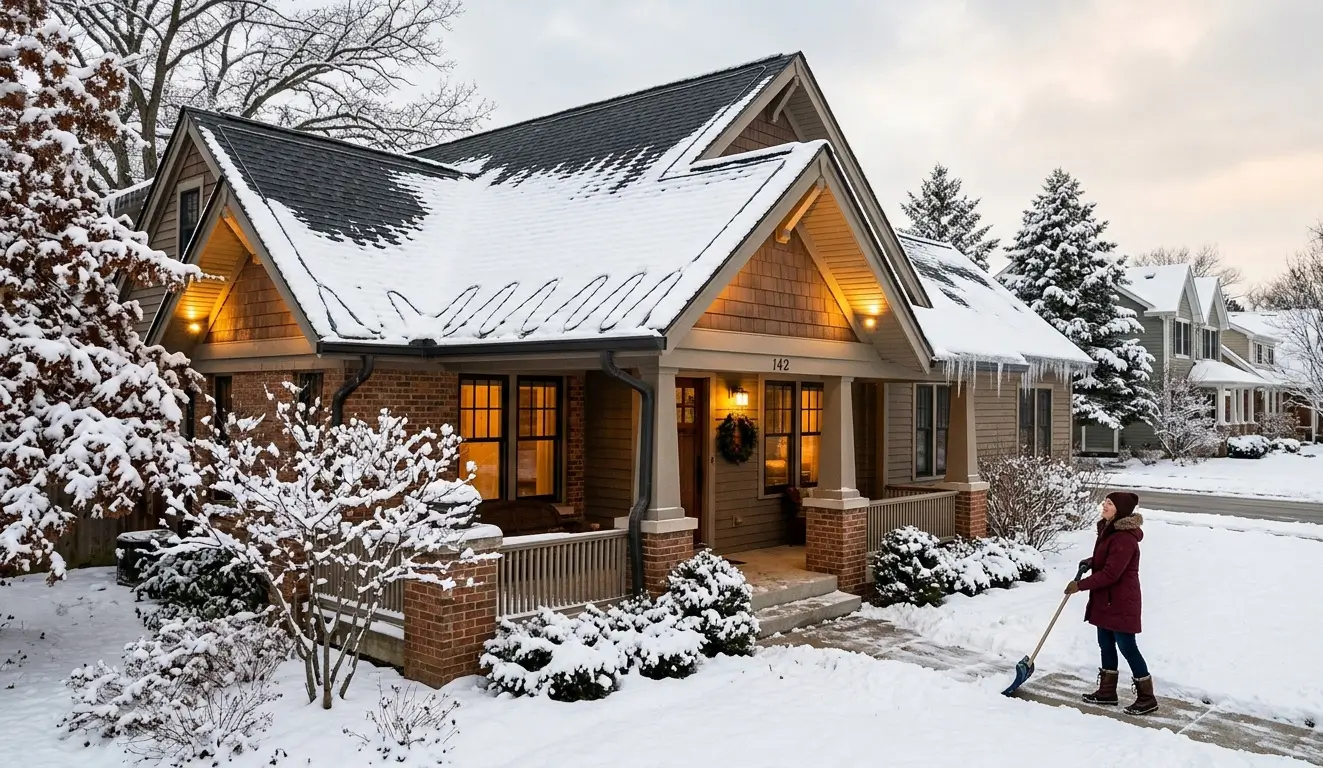
A heating cable (people also call it heat tape or a de-icing cable) is an electric element you run along the roof edge, usually in a zig-zag, and often down into the gutter and downspout. When it is cold and snowy, the cable warms a narrow path so meltwater has somewhere to go instead of refreezing at the eave.
That last part matters, because it is the piece most people get wrong. The cable is not there to clear snow off your whole roof. It keeps a drain channel open so water can escape before it turns into an ice dam. Ice dams are what wreck ceilings in Naperville: snow melts higher up on a warm roof, runs down to the cold overhang, refreezes, and builds a ridge that traps the next round of meltwater until it backs up under your shingles. The cable’s whole job is to keep that ridge from forming. Once you see it that way, the pros and cons make a lot more sense.
The pros
They stop ice dams where dams actually form
On the right house, a properly laid cable does exactly what it is supposed to. It keeps the eaves and gutters draining through the worst of a freeze-thaw stretch, and that is usually enough to keep water out of the wall. If you have one problem valley or one north-facing overhang that ice dams every single winter, targeting it with cable can end years of the same headache.
They are cheaper up front than the alternatives
Fixing an ice dam at the source usually means attic work, so the roof deck stays cold and the snow up top never melts early to begin with. That is the better long-term fix, and I will tell you so on a site visit. It also costs more and takes longer. Cable is the cheaper way in, which is why a lot of homeowners start there. If the dam only ever shows up in one spot, cable might be all you actually need.
They protect the parts of the house that cost the most to repair
Water under shingles does not stay on the roof. It finds drywall, insulation, and wiring. I have opened up more than one Naperville ceiling where an ice dam soaked the insulation and left junction boxes damp, and wet electrical is not a maybe-problem. A cable that keeps the eave draining is cheap compared to a rewire and a mold remediation bill.
They pair well with an electrical system that is set up for them
Cable needs its own reliable power, ideally on a dedicated, GFCI-protected circuit so a fault trips safely instead of feeding a fire. If your panel is already tight or older, that is worth handling first. This is the part homeowners tend to skip and the part I care about most, because a good cable on bad power is still a hazard.
The cons
They cost money to run, every cold day
A heating cable is a resistance heater bolted to the outside of your house. Run it through a long Illinois cold snap and you will see it on the electric bill. Newer self-regulating cable draws less when it is milder and more when it is frigid, which helps, but this is not a set-it-and-forget-it appliance you want humming all winter for no reason. The best setups switch on with a thermostat or a snow sensor, not a homeowner who forgot to unplug it in April.
They wear out faster than your roof
Roof cable typically lasts somewhere in the range of two to ten years depending on quality, sun exposure, and how it was installed. Your shingles will outlive it. That means you are signing up for replacement down the road, plus annual checks. Clips loosen, squirrels chew, UV degrades the jacket. It is not a one-time purchase.
They can be a fire risk if you ignore them
This is the part I never soft-pedal. Old, damaged, or badly installed heat cable starts fires. The U.S. Consumer Product Safety Commission has warned homeowners for years to inspect heat tapes and cables annually and replace anything with cracked or charred insulation or bare wire — you can read the CPSC’s own guidance on inspecting heat tapes before winter. Use UL-listed cable, put it on protected power, look at it every fall, and replace it on schedule. Do that and the risk is small. Skip it and you have a heating element sitting on a wood roof for a decade.
They are not pretty, and they are not a substitute for a warm-attic fix
Cable is visible from the ground. If curb appeal matters or you are about to sell, that is worth a thought. And if your real problem is a hot attic dumping heat into the roof deck, cable only treats the symptom. It keeps the eave clear while the underlying cause keeps making ice. On a lot of houses the honest recommendation is cable plus insulation and ventilation, not cable instead of them.
So should you install them?
On a Naperville roof, cable earns its keep when the ice dam is stuck in one spot, when the attic fixes are out of budget this year, or when you need something protecting the house now with a bigger renovation planned for later. It is the wrong call as a whole-roof cure-all. And it is a bad idea on a stretched or aging panel until the electrical is sorted out first.
The install itself is not something I would hand to a big-box weekend kit. Placement is the difference between a cable that drains the eave and one that just runs up your bill. It needs the right length for the roof, the right pattern, secure clips that will not tear shingles, and above all, safe, dedicated power. That is electrical work, and in Illinois it should be done by a licensed electrician who will pull the permit and stand behind it.
How Cob Services LLC handles it
When we look at an ice dam problem, we start with the electrical, because that is where the safety lives. We will set the cable on a proper dedicated, GFCI-protected circuit, confirm your panel has the capacity to carry it, and update any tired wiring that should not be feeding an outdoor heating element in the first place. If we open a ceiling and find water has already reached the wiring, we handle the rewiring side too, and if it is the middle of the night with water coming in, that is what our 24/7 emergency service is for.
I run every estimate myself, walk the roof before quoting, and stay your point of contact through the final inspection. No hand-off to a sub you never met. If you are a homeowner dealing with ice dams and you want a straight answer about whether cable is right for your house, that is exactly the kind of call we like to get from our Naperville neighbors.
Thinking about roof heating cables before the next freeze? Contact Cob Services LLC or call (630) 427-5923 for a free, no-obligation estimate from a licensed Naperville electrician.
Frequently asked questions
Do roof heating cables melt all the snow off my roof?
No. They keep a narrow drainage path open at the eaves and gutters so meltwater can escape instead of refreezing into an ice dam. They are not designed to clear the whole roof, and expecting that is the most common reason people are disappointed with them.
Are roof heating cables safe?
They are safe when they are UL-listed, installed on a dedicated GFCI-protected circuit, and inspected every fall. The CPSC has linked older and damaged heat tape to thousands of home fires a year, so the safety comes down to good power, good installation, and replacing worn cable on schedule.
How long do roof heating cables last in Illinois?
Usually two to ten years, depending on cable quality, sun exposure, and installation. Our winters and the freeze-thaw cycling are hard on them, so plan on periodic replacement and an annual inspection.
Are heating cables cheaper than fixing my attic insulation?
Up front, yes. Insulation, air sealing, and ventilation cost more but treat the root cause of ice dams. Cable is the lower-cost option that treats the symptom. For many Naperville homes the right answer is a mix, and that is a judgment call best made after someone looks at the attic and the roofline.
Can I install roof heating cables myself?
You can buy a kit, but the power side is real electrical work and the placement decides whether it works at all. In Illinois this should be done by a licensed electrician who pulls the permit and sets it up on safe, dedicated power. A cable on an overloaded circuit is the exact setup that turns into a fire hazard.