
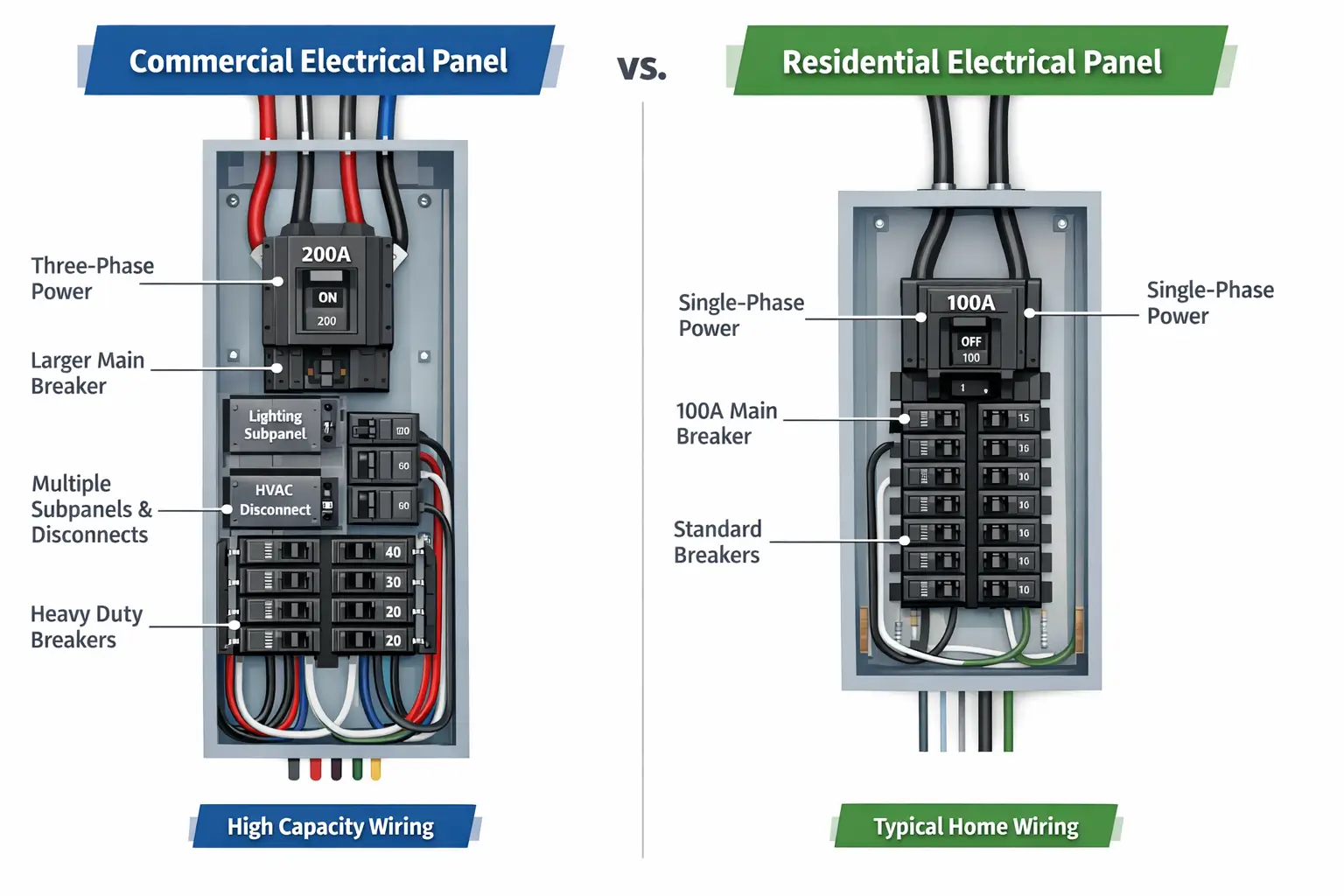
In Illinois, there isn’t one statewide license for all electricians; instead, licensing is handled locally, with many municipalities that offer specific categories like Residential Wireman (for homes) or broader Journeyman/Contractor licenses that can cover commercial work. Residential work is very different than commercial because it requires different systems and electrical panels. In this post we will talk about the differences between residential and commercial electrical panels. We get asked this question a lot by our clients and we decided to reply to it in a blog post.
What is an Electrical Panel?
An electrical panel is also called a breaker panel and it is responsible for power distribution in your house or commercial property. When you house is too old and and your electrician told you that you need a new electrical panel, this is probably because your current panel can’t handle all the modern appliances and other electronics you have in your house. Your panel protects your wiring from overloads and short circuits.
Residential Electrical Panels
Residential panels are designed for homes, apartments, and smaller properties. In Illinois, typical residential panels handle between 100 to 200 amps, which is usually sufficient for modern household appliances, lighting, and electronics.
Key Features of Residential Panels:
- Lower Amperage: Typically 100–200 amps.
- Fewer Circuits: Usually 12–40 circuit spaces.
- Simple Design: Easier to install and maintain.
- Single-Phase Power: Most homes use single-phase power.
- Cost-Effective: Less expensive than commercial panels, both in materials and labor.
Common Uses:
- Kitchens, bathrooms, and laundry areas
- HVAC systems for homes
- Lighting, outlets, and home appliances
Tip for Illinois homeowners: Older homes in Chicago, Naperville, and other cities may have outdated panels like Federal Pacific or Zinsco. Upgrading to a modern panel improves safety and can prevent costly electrical issues in the future.
Commercial Electrical Panels
Commercial panels are built to handle the higher electrical demands of businesses, offices, and industrial buildings. They are more complex, flexible, and robust to support heavy-duty equipment and continuous usage.
Key Features of Commercial Panels:
- Higher Amperage: Often 200–1200 amps, depending on building size and equipment.
- Multiple Circuits: Can support dozens or even hundreds of circuits.
- Three-Phase Power: Many commercial buildings use three-phase power for efficiency.
- Advanced Safety Features: Often include surge protection, monitoring systems, and isolation switches.
- Scalability: Panels are designed to accommodate future growth or expansion.
Common Uses:
- Office buildings and retail stores
- Manufacturing facilities and warehouses
- Hospitals, schools, and other public buildings
Tip for Illinois business owners: Commercial buildings in cities like Chicago or Springfield often require panels that comply with the Illinois State Electrical Code and National Electrical Code (NEC). A licensed commercial electrician can ensure your system meets these standards and avoids costly violations.
Key Differences Between Residential and Commercial Panels
| Feature | Residential Panel | Commercial Panel |
|---|---|---|
| Amperage | 100–200 amps | 200–1200+ amps |
| Power Type | Single-phase | Single or three-phase |
| Circuit Capacity | 12–40 circuits | 50–200+ circuits |
| Complexity | Simple | Advanced with monitoring & surge protection |
| Cost | Lower | Higher |
| Installation | Usually simpler | Requires licensed commercial electricians |
Choosing the Right Panel in Illinois
- Assess Electrical Load: Calculate your current and future power needs. Homes have predictable usage, while commercial buildings often require custom load calculations.
- Code Compliance: Ensure your panel meets NEC standards and Illinois state regulations.
- Professional Installation: Always hire a licensed electrician. Improper installation can cause safety hazards or code violations.
- Plan for Growth: If you anticipate expanding your home or business, choose a panel that can accommodate additional circuits or higher amperage.
Final Ideas
When it comes to electrical work, commercial and residential are different types of work and they require different types of technology. Panels, lights, and even outlets sometimes are different in a restaurant kitchen than in a residential home. Commercial is more expansive and involves more work.
When you search for a reliable electricians near me, contact Cob Services. We specialize in renovations and room additions, rewires, breakers & fuses, plugs, receptacles, switches, ceiling fans, and new construction — serving Naperville, IL and the surrounding areas.