
Serving Naperville and the Greater Chicagoland Area
Why Circuit Overloads Are More Common Than Homeowners Think
When people think about electrical problems, they often imagine sparks, burning smells, or a breaker constantly tripping.
In reality, many electrical issues start quietly through overloaded circuits. As homes add more electronics, appliances, and charging devices, the demand placed on existing wiring continues to increase.
Understanding what causes circuit overloads and how to prevent them helps homeowners protect their electrical systems and reduce safety risks.
What Is a Circuit Overload
A circuit overload happens when more electrical current flows through a circuit than it was designed to handle.
When this happens, the wiring heats up and the circuit breaker may trip to prevent damage.
Even when breakers do their job, repeated overloads can:
- wear out breakers
- stress electrical wiring
- damage connected devices
- increase long-term fire risk
Overloads are often a sign that a home’s electrical distribution needs to be evaluated.
The Most Common Causes of Circuit Overloads
Too Many Devices on One Circuit
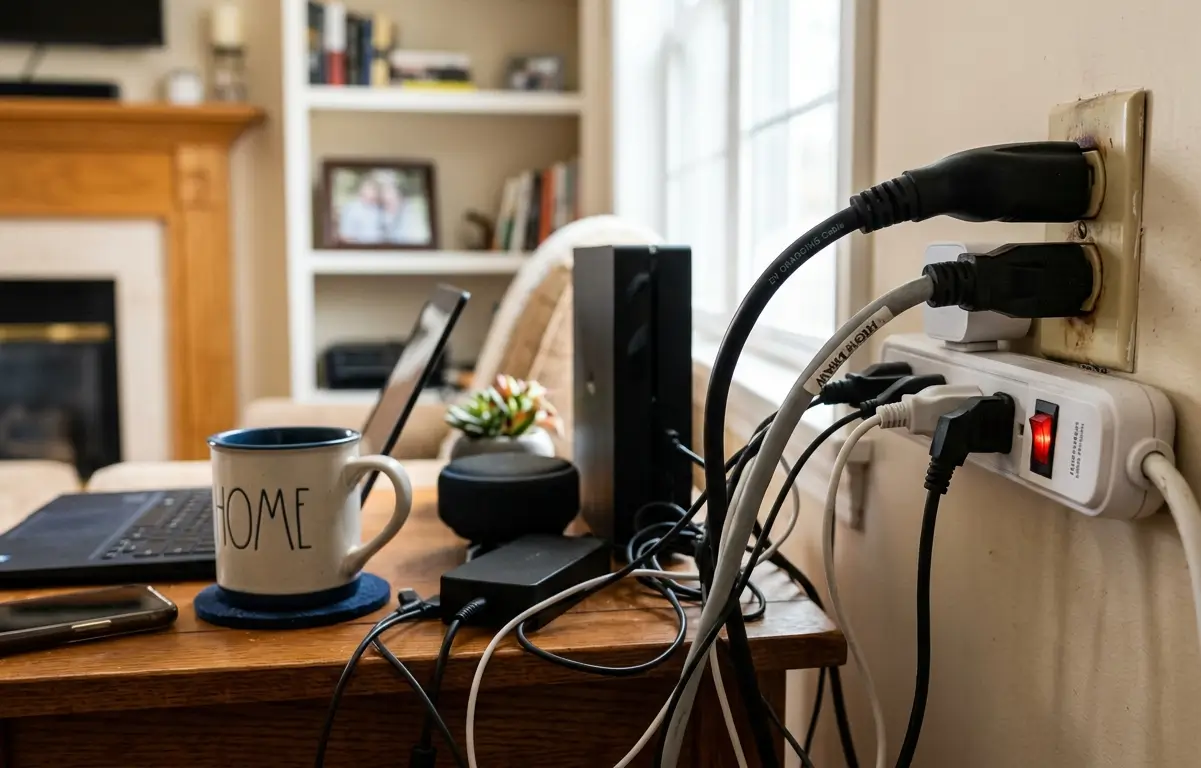
One of the most common causes of overloads is simply plugging too many devices into a single circuit.
This often happens in areas like:
- home offices
- entertainment centers
- kitchens
- garages
Power strips and extension cords make it easy to connect multiple devices, but they don’t increase the capacity of the circuit behind the wall.
High-Demand Appliances
Large appliances require significant electrical current when operating.
Examples include:
- microwaves
- portable heaters
- air conditioners
- EV chargers
- hair dryers
Running multiple high-demand devices on the same circuit can quickly exceed its capacity.
Older Electrical Systems
Many homes in the Chicagoland area were built before modern electrical demands existed.
Older panels and wiring may not have been designed to support:
- multiple televisions
- computers and networking equipment
- smart home devices
- high-capacity kitchen appliances
As demand increases, circuits that once worked fine can become overloaded.
Improper DIY Electrical Work
Sometimes circuits become overloaded because of modifications made without proper planning.
Examples include:
- adding outlets to an existing circuit
- finishing a basement without upgrading circuits
- installing new appliances without evaluating capacity
These changes can push circuits beyond their safe operating limits.
Warning Signs of an Overloaded Circuit
Some overloads trigger a breaker immediately, but others show subtle warning signs.
Homeowners may notice:
- breakers that trip frequently
- lights dimming when appliances start
- warm outlets or switches
- buzzing from electrical panels
- power strips that constantly fill up with devices
These signs often indicate that a circuit is operating under strain.
Why Overloads Shouldn’t Be Ignored
Circuit breakers are designed to protect wiring, but they are not meant to trip repeatedly as a normal condition.
When overloads happen frequently:
- breakers wear out faster
- wiring insulation can degrade
- electrical reliability decreases
- fire risks increase over time
Addressing the underlying cause helps restore safe electrical operation.
Why Adding Power Strips Isn’t the Solution
When outlets are limited, many homeowners rely on power strips or extension cords.
However, these only expand the number of plug connections. They do not increase the electrical capacity of the circuit.
This can actually make overloads more likely, especially when high-power devices are connected.
How Electricians Prevent Circuit Overloads
Professional electrical evaluations typically focus on how power is distributed throughout the home.
Solutions may include:
- adding dedicated appliance circuits
- redistributing loads across existing circuits
- upgrading the electrical panel
- installing additional outlets where needed
These upgrades help ensure circuits operate within their safe limits.
Homes That Benefit Most From Electrical Load Evaluations
Electrical demand has grown significantly in modern households.
Homes that often benefit from circuit capacity upgrades include those with:
- home offices or remote work setups
- finished basements
- EV chargers
- upgraded kitchens
- workshop equipment in garages
- multiple entertainment systems
As technology increases, electrical infrastructure must keep up.
Understanding Your Home’s Electrical Capacity
Many homeowners don’t realize how close their circuits may be operating to their limits.
A professional inspection can help identify:
- overloaded circuits
- aging electrical panels
- areas where additional circuits may be needed
- opportunities to improve electrical safety
Clear information allows homeowners to make confident decisions about upgrades and improvements.
When searching for a licensed electrician in Naperville, IL, call us. We specialize in Remodeling & Renovations Electrical Services, room additions, rewires, breakers & fuses, plugs, receptacles, switches, ceiling fans, and new construction — serving Hinsdale, Downers Grove, La Grange, and the surrounding areas.