
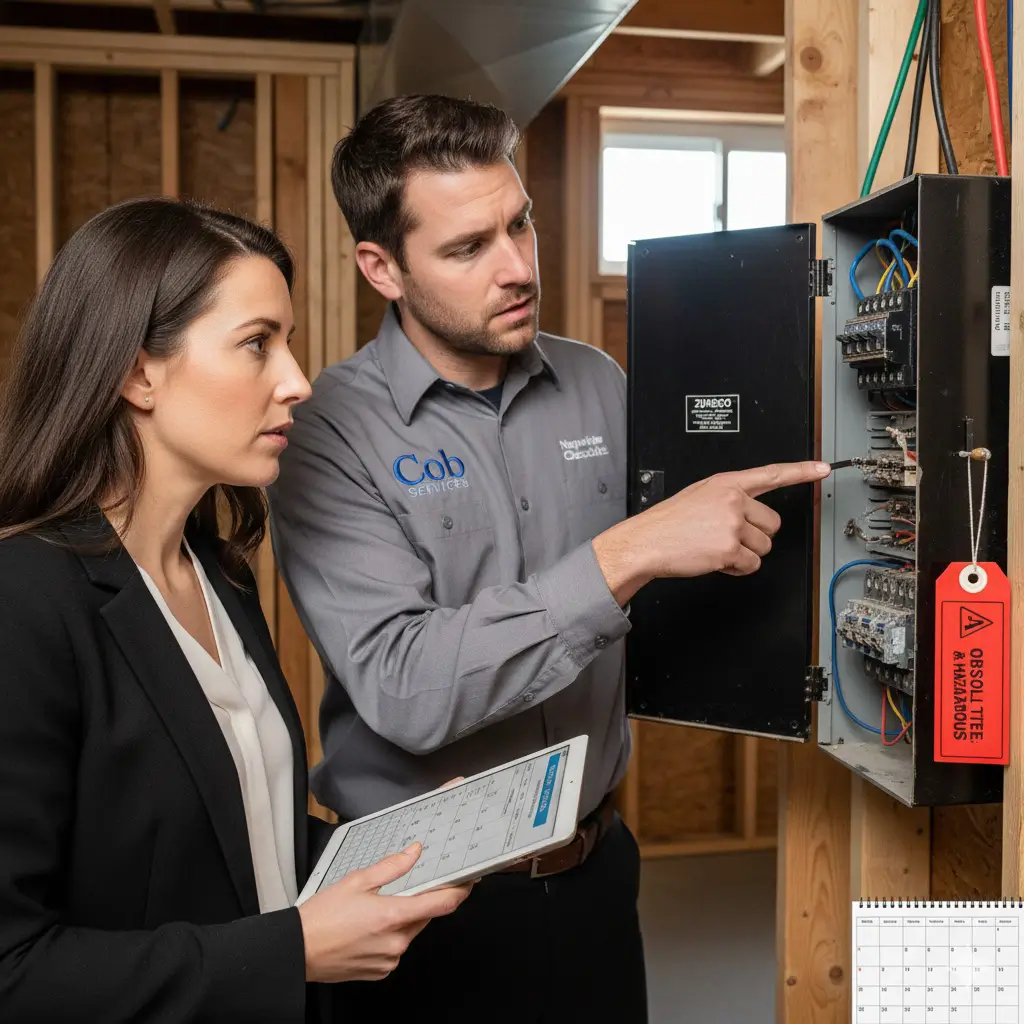
Buying a home in Naperville is a massive investment. Whether you’re eyeing a charming Victorian near North Central College or a sprawling 90s build in White Eagle, you’ve likely already obsessed over the school districts and the kitchen countertops.
But as electricians, we see the stuff the “pretty” listing photos hide. We’ve been called into homes one week after closing because the new owners realized half their outlets don’t work or, worse, their panel is a fire hazard.
Before you sign that stack of papers at the title company, run through this “Cob Services” field guide.
1. The Panel Brand “Red List”
Don’t just look at the breaker box; look at the label. If you see the names Federal Pacific (FPE), Zinsco, or Challenger, you are looking at a system that many insurance companies won’t even cover. In the 2026 market, these are major negotiation points. They are notorious for failing to trip during a surge, which is a leading cause of house fires.
2. Test the GFCI Outlets
A common trick in older Naperville homes is to replace old two-prong outlets with three-prong ones without actually grounding them. Hit the “Test” button on the outlets in the kitchen, bathrooms, and garage. If the button doesn’t pop, or if there aren’t GFCI outlets within six feet of water sources, the home isn’t up to modern safety codes.
3. The “Hidden” Basement Wiring
If the basement is finished, look for “creative” DIY wiring. We often see homeowners who tapped into a light circuit to power a whole home theater or a bar fridge. Look for exposed wires, sagging conduits, or junction boxes that aren’t covered. If it looks like a “handyman special,” it probably is.
4. Check the Service Capacity
Older homes were built for a different era of power. Check the main breaker (usually at the very top of the panel).
- 60 Amps: Completely inadequate for a modern home.
- 100 Amps: The bare minimum, but will struggle with an EV charger or hot tub.
- 200 Amps: The gold standard for a Naperville family home in 2026.
5. Look for Outdoor “Weatherproofing”
Naperville winters and spring storms are brutal on exterior electrical. Check the outdoor outlets—are the covers cracked? Are the wires to the AC unit fraying? These are small fixes that point to how well the previous owner maintained the “guts” of the house.
The Bottom Line
A standard home inspector is a generalist. They check the roof, the plumbing, and the foundation, but they often only do a surface-level glance at the electrical.
If the home was built before 1995, we highly recommend a dedicated electrical entry inspection. It costs a fraction of what a post-move-in emergency repair does, and it gives you the leverage to ask the sellers for a credit.