
Serving Naperville and the Western Suburbs
We’ve all been there: you’re finally ready to install that EV charger, finish the basement, or plug in the new “dream kitchen” appliances, only for the contractor to take one look at your electrical panel and deliver the bad news.
“You’re out of space.”
It’s a frustrating moment, but it doesn’t always mean you need to tear out your entire electrical system. Often, the solution is much simpler and more cost-effective: a subpanel.
What Exactly Is a Subpanel?
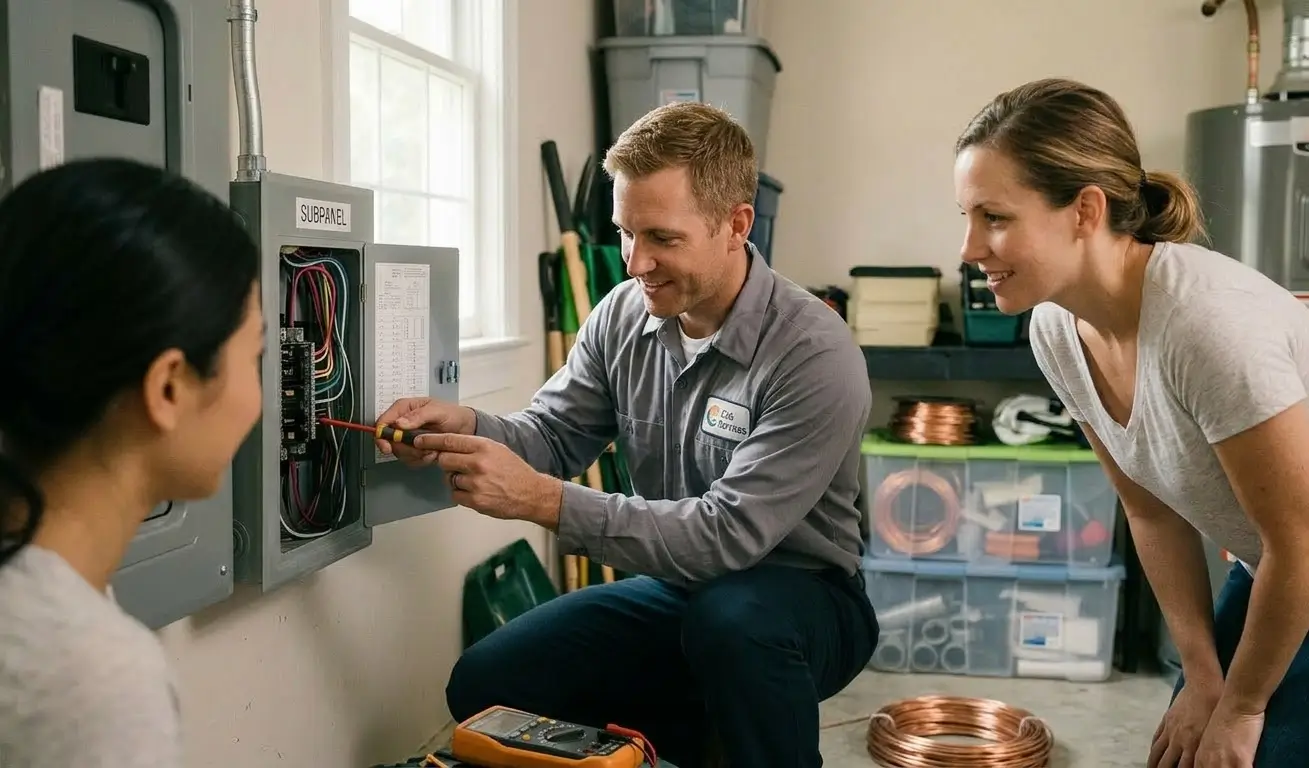
Think of your main electrical panel as the “brain” of your home’s power. A subpanel is like a highly organized assistant. It’s a smaller breaker box that connects to your main panel. It doesn’t bring more total power into your house from the utility company, but it does give you more “slots” to plug things into. It’s the electrical equivalent of adding a high-quality power strip to a wall outlet—it expands your reach and keeps things tidy.
When Does a Subpanel Make Sense?
In older Naperville homes, panels were built for a world with fewer gadgets. Today, between home offices, high-end HVAC systems, and electric cars, those panels are getting crowded.
You might need a subpanel if:
- The “Tetris” Problem: Your main panel is physically full. There isn’t a single spot left to click in a new breaker.
- The Distance Factor: You’re powered up a detached garage, a backyard shed, or a third-floor addition. Instead of running ten different wires across the house, we run one big wire to a subpanel in that area.
- Specific Projects: You’re finally putting in that hot tub, finishing the basement, or setting up a dedicated workshop.
Pro Tip: Subpanels are great for organization. If you have a rental unit or a home business, a subpanel lets you keep those specific circuits separate from the rest of the house.
Subpanel vs. Full Upgrade: Which One Do You Need?
This is the big question. Here’s how to tell the difference:
- Get a Subpanel if: Your home has plenty of power (amperage), but you just ran out of physical room to add more switches.
- Get a Full Panel Upgrade if: Your lights flicker when the AC kicks on, your breakers trip constantly, or you still have an old 60-amp or 100-amp service that can’t keep up with modern life.
Adding a subpanel to an overloaded system is like putting a bigger gas tank on a car with a broken engine—it won’t solve the underlying problem.
Where Do They Go?
We typically install subpanels where they are easiest to reach and most useful. Common spots around the Western Suburbs include:
- Basements (perfect for finished living spaces)
- Attached or Detached Garages (ideal for EV chargers and tools)
- Utility Rooms
- Home Additions
Why Homeowners Love the Subpanel Route
Beyond just “fixing the problem,” subpanels offer a few hidden perks:
- Clarity: No more guessing which mystery switch controls the guest room. Everything is clearly labeled and localized.
- Efficiency: It simplifies future repairs. If a breaker trips in the garage, you reset it in the garage—not in a dark corner of the basement.
- Cost-Effective: It’s often significantly cheaper than a full service upgrade if your main panel still has “juice” to give.
Is Your Home Ready for an Upgrade?
Whether you’re planning a major renovation or you’re just tired of playing “musical chairs” with your circuit breakers, we’re here to help.
At Cob Services, we live and work right here in Naperville. We don’t just “install boxes”—we make sure your home is safe, functional, and ready for whatever project you tackle next.
When searching for a licensed electrician in Naperville, IL, call us. We specialize in Remodeling & Renovations Electrical Services, room additions, rewires, breakers & fuses, plugs, receptacles, switches, ceiling fans, and new construction — serving Hinsdale, Downers Grove, La Grange, and the surrounding areas.