
Serving Naperville and Chicagoland
What Naperville Homeowners Should Expect During a Full Electrical Rewire
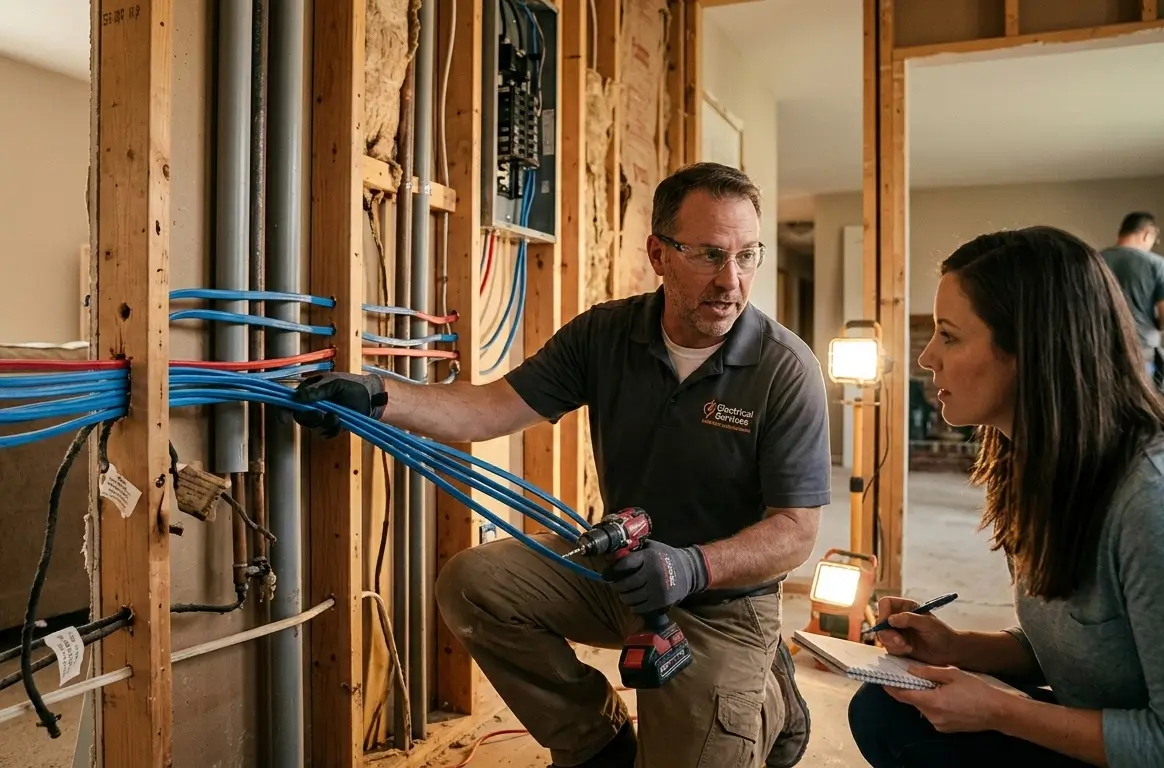
For many homeowners, the idea of rewiring an entire house feels overwhelming.
- Questions come up immediately.
- Will walls be opened everywhere
- How long will it take
- Can we stay in the home
- What exactly gets replaced
Understanding the process removes uncertainty and allows homeowners to make informed decisions about upgrading older electrical systems.
Why Older Naperville Homes Sometimes Need Full Rewiring
Many homes in Naperville built in the 1960s through 1980s were designed for far less electrical demand than modern households require.
Today’s homes rely on:
- high-load kitchen appliances
- home offices and technology
- EV chargers
- finished basements
- outdoor lighting systems
As electrical usage increases over time, homeowners may notice:
- limited circuit capacity
- ungrounded outlets
- aging or brittle wire insulation
- frequent breaker trips
- difficulty adding new appliances
When the wiring backbone itself is outdated, a whole home rewire can be more effective and safer than repeated patchwork repairs.
Step One: Evaluation and Planning
Every full rewire begins with a comprehensive system evaluation.
This includes reviewing:
- existing panel capacity
- current circuit distribution
- condition of branch wiring
- grounding and bonding
- future electrical goals
A rewire is not simply replacing old cable. It is an opportunity to redesign the electrical layout around how the home functions today.
For example, kitchen circuits, bathroom GFCI protection, and dedicated appliance lines are planned according to current code and real-world usage patterns.
Step Two: Permits and Code Compliance in Naperville
Electrical rewiring in Naperville requires proper permitting and inspection.
Current electrical codes are significantly more stringent than those in place decades ago. A full rewire ensures:
- modern grounding standards
- proper arc fault and ground fault protection
- adequate circuit spacing
- correct breaker sizing
- compliance with current electrical code
This stage protects homeowner safety, insurability, and long-term system reliability.
Step Three: Accessing Wiring Paths
Rewiring requires access to wall cavities, ceilings, and sometimes flooring.
However, experienced residential electricians plan routing carefully to minimize disruption. In many Naperville homes, wiring can often be run through:
- attics
- basements
- crawl spaces
- unfinished utility areas
Strategic access is prioritized over unnecessary demolition. The objective is to upgrade the system efficiently while preserving as much finished space as possible.
Step Four: Installing New Circuits
During a whole home rewire, outdated branch circuits are replaced with modern copper wiring that meets current safety standards.
This often includes:
- adding dedicated circuits for kitchens and laundry
- improving outlet placement
- upgrading grounding systems
- balancing electrical loads across the panel
- preparing for future high-demand equipment
Each circuit is designed with long-term functionality in mind — not just immediate replacement.
Step Five: Inspection and System Testing
Before walls are fully restored, the newly installed wiring is inspected to confirm compliance with local codes.
Once approved, the system undergoes testing to verify:
- proper voltage delivery
- balanced load distribution
- safe breaker operation
- reliable grounding continuity
Only after inspection and performance verification is the rewire considered complete.
How Long Does a Whole Home Rewire Take?
The timeline depends on several factors:
- home size
- layout complexity
- accessibility of wiring paths
- scope of panel or service upgrades
Smaller homes may require only several days. Larger homes or more complex layouts can require additional time.
Clear communication and phased scheduling help homeowners understand each stage before work begins.
Can You Stay in the Home During Rewiring?
In many cases, homeowners can remain in the home during portions of the project.
However, certain phases may require temporary power interruptions or limited access to specific areas. Advanced scheduling ensures homeowners can plan accordingly.
Why Rewiring Is Often Done During Renovations
Many Naperville homeowners choose to complete rewiring during:
- kitchen remodels
- basement finishing projects
- home additions
- electrical panel upgrades
Combining projects reduces overall disruption and allows the entire electrical system to be redesigned cohesively rather than incrementally.
Why Rewiring Is About Long-Term Stability
A properly executed whole home rewire provides:
- decades of safe operation
- expanded circuit capacity
- support for modern appliances and technology
- reduced nuisance electrical issues
- flexibility for future upgrades
It replaces uncertainty with stability and future-proofs the home’s electrical infrastructure.
Understanding Before Committing
Not every older home requires a full rewire. Some properties benefit from targeted circuit upgrades or panel improvements instead.
The critical step is a thorough evaluation of the existing system before making a decision.
Cob Services provides comprehensive whole-home electrical safety inspections in Naperville to determine whether a full rewire is necessary — and if so, how to structure the upgrade to best support your long-term plans.
When searching for a licensed electrician in Naperville, IL, call us. We specialize in Remodeling & Renovations Electrical Services, room additions, rewires, breakers & fuses, plugs, receptacles, switches, ceiling fans, and new construction — serving Hinsdale, Downers Grove, La Grange, and the surrounding areas.