
Think about how much we ask of our homes these days. Between charging EVs in the garage, running home offices, and powering “smart” everything, our electrical systems are working harder than ever before. But for many of us in Naperville—especially those living in our beautiful older neighborhoods—the wiring behind the walls was never designed for the 2026 lifestyle.
When your home starts acting up, it’s usually not just a “quirk.” It’s your house trying to tell you something. Here is a look at the most common red flags we see around town and what they actually mean for your safety.
1. The Circuit Breaker “Workout”
If you find yourself trekking to the basement or garage to flip a breaker back on once a week, you’ve got a problem. Usually, this is just a case of “too much stuff, not enough power,” but it can also signal a short circuit or a breaker that’s simply worn out.
- The Reality Check: A tripping breaker is a safety feature doing its job. If it happens constantly, the system is telling you it can’t handle your power needs safely.
2. “Spooky” Flickering Lights
It’s rarely a ghost—though it can feel like one. If your lights dim or flicker every time the AC kicks on or you start the microwave, your appliances are “stealing” power from the rest of the house.
- The Risk: This often points to loose connections or an aging main service line. In older homes, these loose wires can heat up, which is a leading cause of electrical fires.
3. The “Vintage” Panel Problem
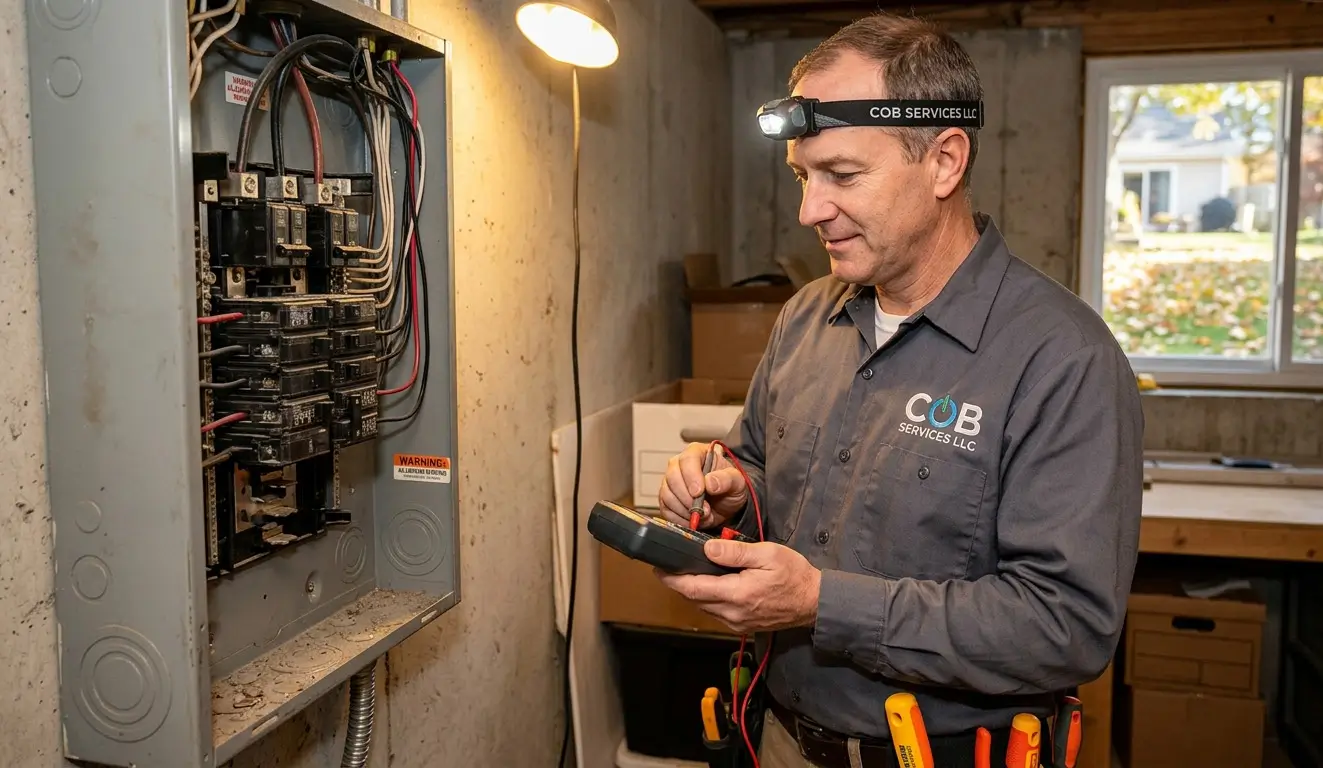
If your electrical panel looks like it belongs in a time capsule—or if you’re still dealing with those screw-in glass fuses—you’re likely underpowered for today’s world.
- Signs of Trouble: A panel that feels warm to the touch or makes a faint buzzing sound is a major red flag. Most modern homes need at least a 200-amp service to run smoothly and safely.
4. The Mystery of the Dead Outlet
We’ve all got that one outlet that just… stopped working. Sometimes it’s just a tripped GFCI (the ones with the “test” and “reset” buttons), but other times, the internal wiring has literally burnt out.
- The Fix: Don’t just ignore it and use the outlet next to it. A dead outlet is often a sign of a larger wiring issue hidden behind your drywall.
5. The “Power Strip Mountain”
If your living room or office looks like a tangled nest of extension cords, you’re playing a dangerous game. Power strips are great for a lamp and a laptop, but they aren’t meant to handle high-draw appliances.
- The Solution: It’s much safer (and looks way better) to have a professional install a few extra outlets exactly where you need them.
6. The 1970s Aluminum Trap
Many homes built in the late 60s and 70s were wired with aluminum instead of copper. The problem? Aluminum expands and contracts significantly when it gets hot, which can cause connections to wiggle loose over time.
- The Action Plan: You don’t always need a full rewire, but you do need an expert to ensure those connections are retrofitted with modern, safe connectors.
Why “Dealing with it Later” Is a Bad Strategy
Electrical issues are unique because they rarely stay small. What starts as a flickering bulb can eventually fry the motherboard on your expensive 4K TV or, in the worst-case scenario, lead to a fire.
Preventative maintenance isn’t just about convenience; it’s about peace of mind.
Your Local Naperville Experts
At Cob Services LLC, we’re your neighbors. We know the specific challenges of Naperville homes, from the historic charms near downtown to the newer builds out south. We don’t just “fix wires”—we make sure your home is built to handle your life.
Notice something weird happening with your power? Give us a shout. We’ll come out, take a look, and give you the straight scoop on how to keep your home running safely.