
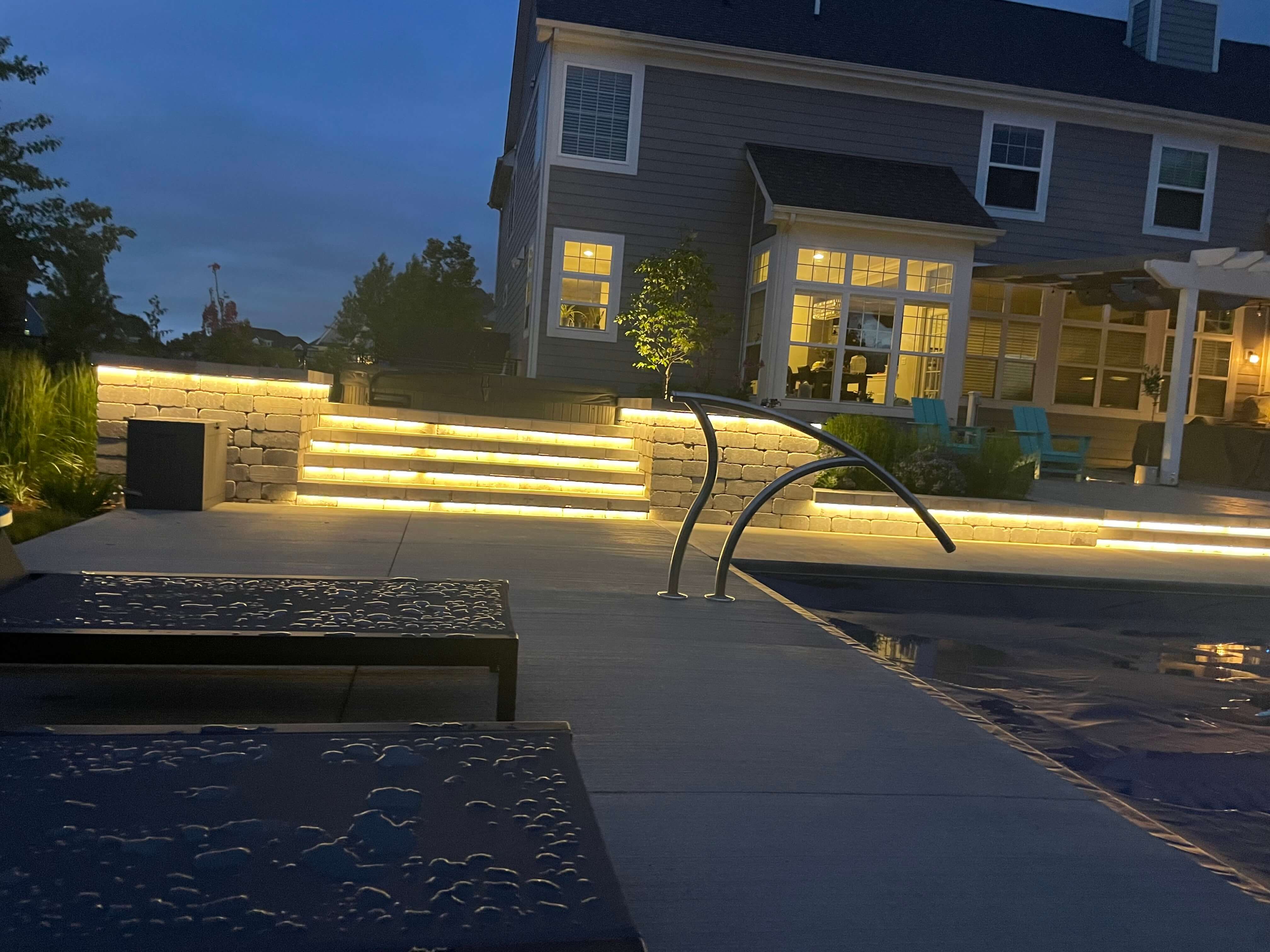
If you’re closing on a new construction home in West Naperville — White Eagle, Ashwood Park, Tall Grass, Stillwater, Hobson Greene, or one of the newer builds further out toward Route 59 — you’re getting a house that’s been through formal inspection by the City of Naperville’s building department. Code-compliant, signed off, Certificate of Occupancy issued.
That’s not nothing. It’s actually a lot.
But “passed inspection” and “set up the way you actually want to live in it” are two different bars. New construction electrical work in this area is volume work. It’s done fast, by crews moving from house to house, and the standard is meets code — not thought through for how the family moving in will actually use the kitchen.
Below is the walk-through I’d do as the homeowner before move-in day. Not to replace the city inspection or your home inspector. To catch the stuff that isn’t a code issue but is the kind of thing you’ll be annoyed about for ten years if you don’t notice it now.
Before you start — what you actually need
A flashlight, a phone charger (any cheap one), and the builder’s electrical plan if they’ll give you a copy. That’s it. The phone charger is the smartest tool you’ll use that day — more on that below.
Walk the house once empty. You won’t get this view again after the moving truck shows up.
1. Count your outlets and test every single one
Every outlet in the house. Plug in the phone charger, confirm power, move on. It takes about 20 minutes for the whole house and it’s the highest-yield thing you can do.
What you’re looking for:
- Dead outlets. New-construction crews wire fast. A loose wire-nut in a backbox can leave an outlet dead from day one. Easier to flag during walk-through than after the couch is in front of it.
- GFCI outlets that won’t reset. Kitchens, bathrooms, garages, exterior, basement unfinished areas, and within 6 feet of any sink should have GFCI protection. Hit the test button, hit reset. If reset doesn’t work, the outlet — or something downstream of it — is wired wrong.
- Outlets that feel loose. A receptacle that doesn’t grip the plug is going to be worse in five years. Flag it now.
- Outlets in places you don’t expect. Builders sometimes mount outlets where furniture obviously goes (behind where the bed centers, behind the planned TV). You want to know about it before you frame your art around it.
2. The kitchen is where new builds skimp the most
Newer Naperville builds have nice-looking kitchens, but the electrical underneath is often the bare minimum the code allows.
Look for:
- At least two 20-amp small-appliance circuits serving the countertop outlets. (You can’t tell which circuit an outlet is on just by looking — but you can tell whether the outlets exist.) Open the panel and confirm at least two breakers labeled for kitchen counter circuits.
- Dedicated circuits for the refrigerator, dishwasher, microwave, and disposal. Each should have its own. If your microwave is sharing a circuit with the disposal, you’ll trip a breaker the first time both run.
- GFCI on every counter outlet within 6 feet of the sink (which, in most kitchens, is all of them).
- An outlet on the island. Required for islands of a certain size, often missed in earlier framing decisions and added as an afterthought.
- Where the range hood is fed from. Look up. Is there a circuit for it? If you’re upgrading to a high-CFM hood later, you’ll want to know if the existing circuit can handle it.
3. Look at the panel — actually look at it
Open the panel cover. You don’t need to touch anything inside. You’re looking for three things:
- Is the directory filled out? The little card on the inside of the door listing what each breaker controls. On new builds, this is often blank, half-filled, or written in pencil that’s already smudged. Ask the builder to complete it before closing. Doing it yourself later means going room-by-room with someone flipping breakers — a half-day job.
- What size is the service? 200-amp is the common standard for new construction in this market. Some smaller builds come in at 150-amp. If you’re planning an EV charger, hot tub, addition, or finished basement in the next five years, knowing your starting amperage matters.
- Are there empty slots? A panel that’s already 90% full means any future circuit (EV charger, basement bar, sunroom, hot tub) is going to require a sub-panel. That’s fine, but worth knowing before you assume “it’s a new build, there’s room.”
4. The garage — where future-you will care most
This is the part most buyers don’t think about until two years in:
- Is there a 240V outlet roughed in for an EV charger? Many newer builds in West Naperville include this; some don’t. If it’s not there, ask the builder if the panel has capacity for a future 40–60 amp dedicated circuit. The answer affects what kind of EV charger you can install later and how much it’ll cost.
- GFCI in the garage. Required, but worth confirming.
- Outlets for the garage door openers. Should be ceiling-mounted near each opener, not run via extension cord.
- Lighting on a switch you can actually reach. Walk in, walk out. Is the switch where your hand naturally goes? On a three-car garage with one switch by the side door, it isn’t.
5. Smoke and CO detectors
Illinois requires hardwired, interconnected smoke detectors with battery backup in every bedroom, outside every sleep area, and on every level. CO detectors within 15 feet of every sleeping area. New builds are required to meet this — but interconnection sometimes fails between floors when a wire was nicked during framing.
Ask the builder to demonstrate that pressing the test button on one detector triggers all of them. That’s the only real test. If they all chirp together, you’re good. If only the one you pressed sounds, the interconnect is broken somewhere — and that’s a builder-fix item, not yours.
6. Exterior outlets and lighting
- At least one exterior outlet on the front and one on the back — both GFCI, both with weatherproof covers. The little plastic flap matters; a missing or cracked cover means water in the box on the next storm.
- Soffit outlets on the eaves for holiday lighting. Newer builds increasingly include these. Worth checking — running an extension cord from inside the garage to the gutter every December gets old.
- The exterior lighting is on a switch you can find. Front porch, back patio, garage exterior. If the switch is in a closet you didn’t notice, that’s a year of fumbling.
7. What’s not a builder problem (but worth catching anyway)
A new build will pass code with the bare minimum. If you want more — under-cabinet kitchen lighting, recessed cans in the family room, a ceiling fan in the primary bedroom, smart switches throughout, a whole-home surge protector at the panel — those are easier and cheaper to add before you move in than after.
Walls aren’t open anymore. But the panel is accessible, the attic is empty, and there’s no furniture to work around. The week between closing and move-in is the cheapest window you’ll ever get for upgrades.
When to call us
If your walk-through turns up something that doesn’t feel right — a dead outlet that won’t come back, a GFCI that won’t reset, a panel directory the builder won’t complete, a missing 240V garage circuit you wanted, or a smoke detector interconnect that isn’t working — that’s the kind of thing we handle for new West Naperville homeowners every month.
We’ll come out, diagnose what’s going on, and either fix it or document it clearly enough for you to take back to the builder under your warranty. We work across White Eagle, Ashwood Park, Tall Grass, Stillwater, and the rest of West Naperville’s newer subdivisions, plus the surrounding suburbs in DuPage and Will County.
About the author

Alexandr Godonoaga is the lead electrician and owner of Cob Services LLC, a registered electrical contractor based in Naperville, IL. With 10+ years of residential electrical experience across Naperville and the western suburbs, Alex has worked on everything from pre-1950 knob-and-tube rewires in downtown Naperville to new-build EV charger installs in West Naperville’s newer subdivisions. He runs every project personally — from the first walkthrough through final City of Naperville inspection.
Cob Services LLC is fully licensed, bonded, and insured in Illinois.
Connect on LinkedIn → Alexandr Godonoaga