
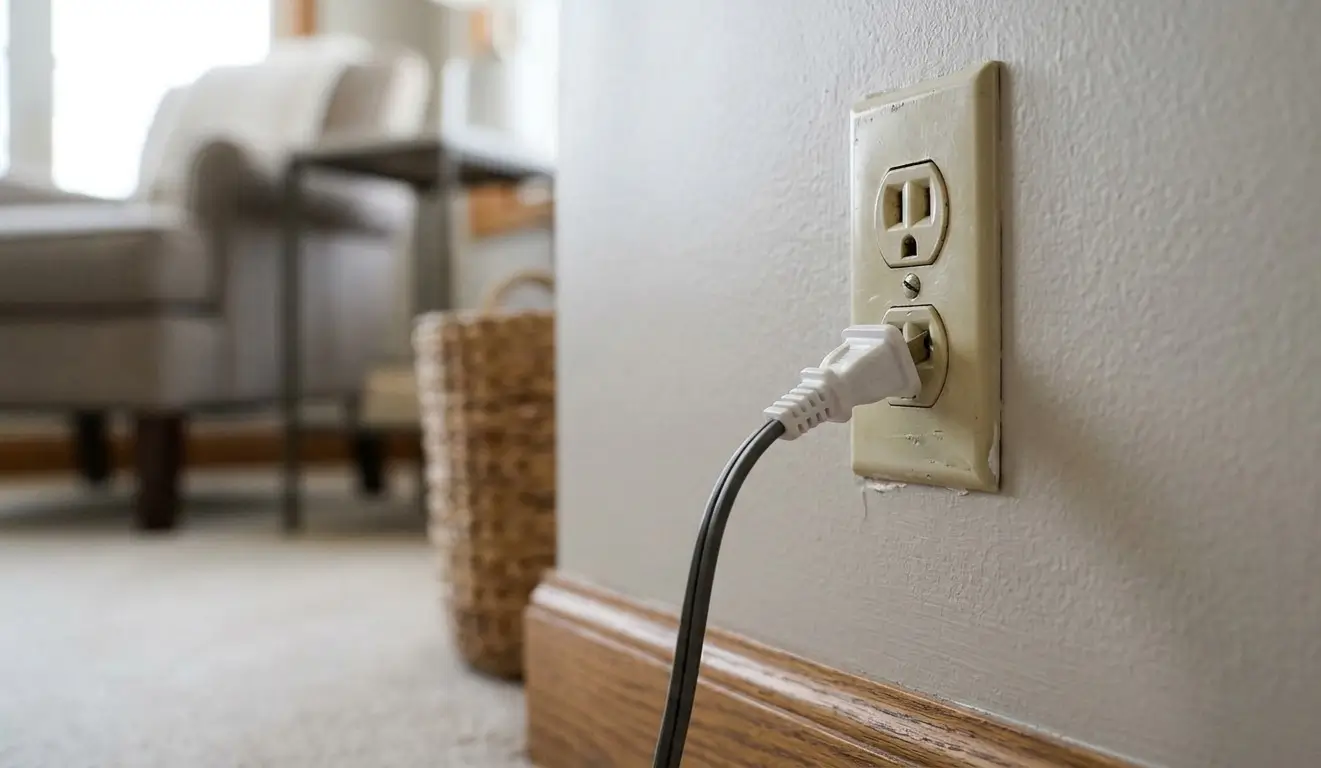
There is nothing more annoying than plugging in your phone, walking away, and coming back an hour later only to find the plug has slipped halfway out and your battery is still at 2%.
If you’re constantly propping up your vacuum cord with a heavy book or shimming a charger just to keep it from falling out, you aren’t alone. It’s one of those “living with it” quirks of a home that eventually becomes a massive headache.
But why does it happen, and is it actually a big deal? Here’s the lowdown on why your outlets are losing their grip.
The “Mystery” Inside Your Wall
Most people think an outlet is just a solid block of plastic. In reality, there are tiny, spring-loaded metal tension coils inside.
Think of them like a pair of tweezers. Every time you shove a plug in, those tweezers open up. Over ten, fifteen, or twenty years of use, that metal loses its “spring.” Eventually, it just stays wide open. At that point, there’s nothing left to grab onto your plug prongs, and gravity takes over.
Why it usually happens in certain spots:
- The Kitchen: Think of the toaster or coffee maker you plug and unplug every single morning.
- The Bedside: This is the “high-traffic” zone for phone chargers that get yanked out at weird angles.
- The Living Room: Usually from the vacuum cleaner being pulled just a little too far across the room.
Is a Loose Plug Actually Dangerous?
In most cases, it’s just a nuisance. But here’s the “pro” perspective: a loose connection is an unstable connection.
When a plug isn’t seated firmly, electricity has to “jump” across a tiny gap to complete the circuit. This can lead to arcing, which is a fancy way of saying tiny sparks are flying inside your wall. This creates heat. If you’ve ever noticed an outlet feeling warm to the touch or seen those faint brown scorch marks on the plastic, that’s a red flag that your “nuisance” has turned into a potential fire hazard.
Signs Your Outlets Are Hitting Retirement Age
It’s not always just about the “slippage.” Keep an eye out for these other tell-tale signs:
- The “Crackle”: If you hear a faint buzzing or clicking when you plug something in.
- Physical Damage: Cracks in the faceplate or the outlet body itself.
- Discoloration: Any yellowing or browning around the slots.
- The “Wiggle”: If the entire outlet moves inside the wall when you touch it.
Why It’s Worth the Upgrade
Replacing an outlet isn’t just about safety; it’s about making your life easier. If you’re going to have an electrician swap out the old, tired outlets, it’s the perfect time to modernize.
Imagine having USB-C ports built right into the wall by your nightstand, or GFCI protection in the laundry room where you never had it before. It’s a small change that makes your home feel significantly more “high-end” and functional.
Let’s Get It Fixed
If you’re tired of playing the “will it stay or will it fall” game with your plugs, we’re here to help.
At Cob Services, we help homeowners across Naperville and the surrounding areas get their electrical systems back in tip-top shape. We don’t just swap parts; we make sure your home is actually safe for your family.
Our Gift to You: We offer a Complimentary Electrical Safety Inspection. One of our licensed residential electricians will come out, check your outlets, test your panel, and make sure your wiring is up to snuff—completely on the house.
Ready to stop propping up your plugs? Give our local electricians a call or schedule your inspection today. Let’s make your home’s power dependable again.