
By Alexandr Godonoaga, Owner and licensed electrician at Cob Services LLC (IL license #26-00032356) · Serving La Grange and the western suburbs
I get this question a couple of times a month now, almost always from a La Grange business owner who just sat through an outage and lost a cooler full of product or a morning of appointments. It usually comes out the same way: “Should I put in a generator, or one of those battery systems everyone’s talking about?”
Fair question. And the honest answer is that it depends on your building, your loads, and how long the power tends to stay out around here. I’ve installed both. Neither one is the right call for every business, and anyone who tells you otherwise is selling the one they happen to stock. So here’s the real comparison, the way I’d explain it standing in your utility room.
What each one actually is
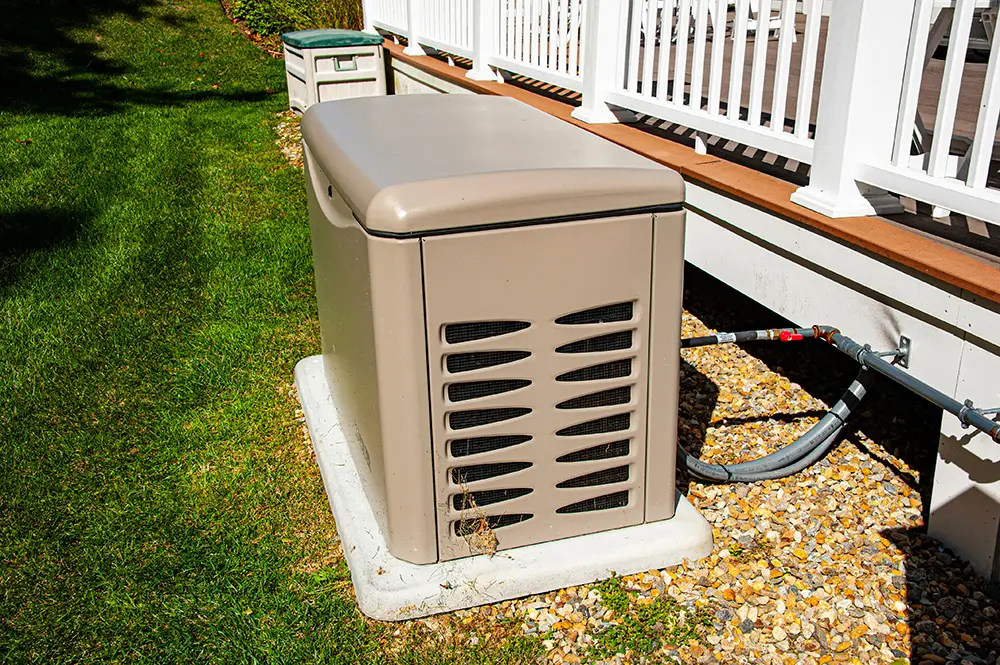
A standby generator is a permanently installed engine, usually running on natural gas or propane, that sits outside your building. When the power drops, an automatic transfer switch senses it and starts the generator within a few seconds. It runs until the utility comes back. As long as there’s fuel in the line, it keeps going.
A commercial battery backup is a bank of batteries, sometimes paired with solar, that stores energy and releases it when the grid goes down. No engine, no fuel, no exhaust. It’s quiet, and it kicks in instantly with no gap at all. The catch is capacity: a battery only holds what it holds, and once it’s drained, you’re waiting on either the grid or the sun to refill it.
That difference in how they refill is the whole ballgame, and it’s where most of the decision gets made.
The comparison that actually matters
| Factor | Standby generator | Commercial battery backup |
|---|---|---|
| Runtime | Effectively unlimited on natural gas. Runs for days if it has to. | Limited to stored capacity, often a few hours at full commercial load unless heavily oversized. |
| Transfer speed | A few seconds of gap while it starts. | Instant. No flicker, no reset on your equipment. |
| Ongoing maintenance | Oil, filters, annual load testing, exercise cycles. | Very little. No engine to service. |
| Noise and space | Runs loud, needs outdoor clearance and a fuel source. | Silent, can sit indoors, no exhaust. |
| Upfront cost | Lower for the same backed-up load, generally. | Higher per kilowatt of usable backup, though incentives can close the gap. |
| Best fit | Long outages, heavy or continuous loads, refrigeration. | Short outages, sensitive electronics, buildings where noise or emissions are a problem. |
How I’d think about it for a La Grange building specifically
Outages around La Grange and the western suburbs tend to come from summer storms and the occasional winter ice event. When a line goes down, ComEd is usually back within a few hours, but a bad storm can stretch that to a day or more. That pattern matters, because it’s exactly the scenario where the two systems part ways.
If you run a restaurant, a grocery, a medical office, or anything with refrigeration or life-safety equipment, I lean generator almost every time. A walk-in cooler doesn’t care how quiet the backup is. It cares whether the power is still on in hour six. A battery sized to carry a full commercial refrigeration load through a multi-hour outage gets expensive fast, and even then you’re watching a gauge. A natural gas generator just keeps running.
If you run an office, a small retail shop, a salon, or a space where the real goal is keeping the lights, the POS system, and the computers alive through a short blip, battery backup starts to make a lot of sense. The instant transfer means your servers and registers never reboot. It’s silent, so there’s no generator droning behind your storefront. And if you’re already looking at solar, the battery pairs with it naturally.
There’s also a middle path I set up more often than people expect: a generator for the whole building, plus a small battery or UPS on the truly sensitive gear so there’s zero gap on the equipment that can’t tolerate even a few seconds. You don’t have to treat this as one or the other.
The part most sales pitches skip: code and sizing
Whichever way you go, a commercial backup system isn’t a plug-and-play appliance. It has to be sized to your actual load and installed to code, and for a lot of commercial buildings that means following NFPA 110, the standard that governs emergency and standby power systems. If your building has fire pumps, elevators, or emergency lighting, the rules about how fast power has to come back and how the system gets tested aren’t optional. You can read the scope of that standard straight from the NFPA 110 page if you want the technical grounding.
Sizing is where I see the most expensive mistakes. Undersize the system and it trips or drains right when you need it. Oversize it and you’ve spent thousands you didn’t have to. This is why I walk the building before quoting anything. I want to see your panel, your critical loads, and how the equipment actually cycles before I put a number on paper. A generator without a properly wired transfer switch is just an expensive lawn ornament, and I’ve written about that one separately.
The panel matters too. Older La Grange commercial buildings sometimes have a service that’s already near its limit, and adding backup power can force a panel upgrade before anything else happens. Better to know that on day one than halfway through the job.
So which one should you buy?
Here’s my honest short version. If long runtime and heavy loads are your worry, go standby generator. If instant, silent, low-maintenance coverage for shorter outages is the priority, go battery. If you want long runtime and zero-gap protection on sensitive gear, combine them. And in every case, get the system sized by someone who looked at your building, not someone reading specs off a brochure.
If you’re a homeowner rather than a business owner and landed here by accident, the tradeoffs shake out a little differently at residential scale. I broke that version down in a separate post on battery backup vs. standby generator for homes.
Planning backup power for a La Grange business?
We’re a licensed commercial electrical contractor serving La Grange and the western suburbs. I’ll walk your building, size the system to your real loads, and give you a free written quote with no dispatch fee. See our commercial electrical services in La Grange, IL, or call (630) 427-5923 and you’ll talk to an electrician, not an answering service.
Frequently asked questions
How long can a battery backup run a commercial building during an outage?
It depends entirely on the size of the battery bank and how much load you’re carrying. A system built for a small office running lights, computers, and a POS can go several hours. The same battery trying to carry commercial refrigeration will drain much faster. Sizing has to match your specific loads, which is why we measure before we quote.
Do I need a permit for a commercial generator in La Grange?
Yes. Commercial backup power installation requires permits and inspection, and depending on the building it may fall under NFPA 110 requirements for emergency and standby systems. We pull the permits with the Village of La Grange and coordinate the inspection so the system is signed off correctly.
Is a natural gas generator better than propane for a business?
For most La Grange commercial buildings on a gas line, natural gas is the easier choice because you never have to refill a tank. Propane makes sense when there’s no gas service at the property. We’ll tell you which fits your building when we walk it.
Can I add battery backup to a building that already has solar?
Usually yes, and it’s one of the better cases for going battery. The panels recharge the bank during daylight, which extends how long you can ride out an outage. We check your existing solar setup and panel capacity to confirm it works before installing.
What does commercial backup power cost in La Grange?
It varies with the size of the system and how many circuits you’re backing up, so we don’t quote ranges off a phone call. We walk the site, size it to your critical loads, and give you a free written quote. The price you’re quoted is the price you pay.