
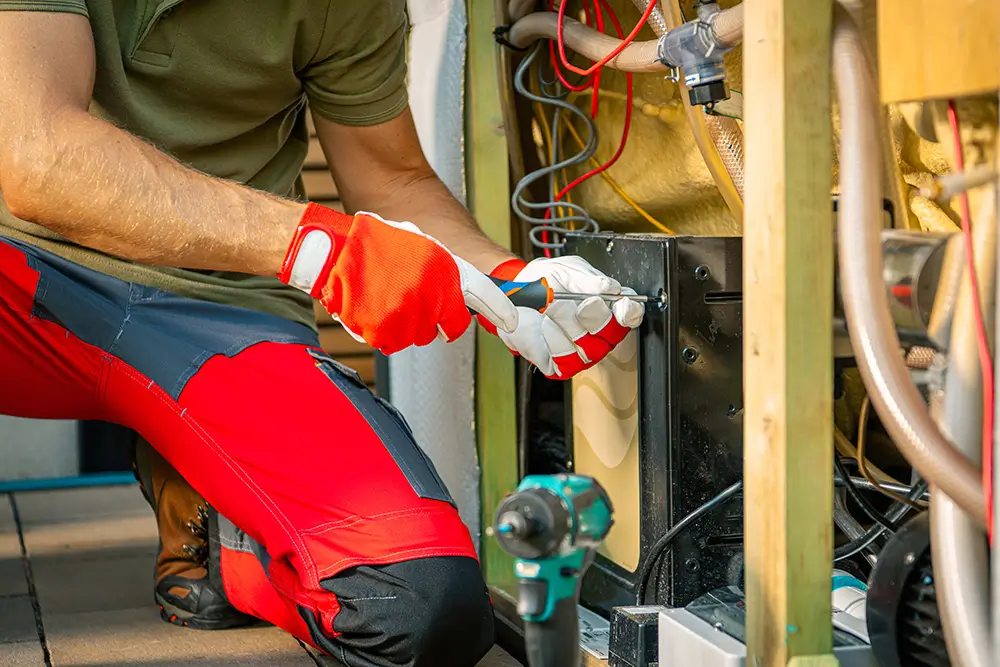
Every spring we get the same call. A Naperville homeowner just had a spa delivered, the patio crew is staging concrete for next week, and somebody at the supply store told them the tub plugs into a 240V outlet “like a dryer.” It does not. And the inspector who shows up to sign the job off is going to look at three things before he looks at anything else: the GFCI, the disconnect, and the bonding.
Get those three wrong and the spa does not get powered up. Get them right and the rest of the install is mostly conduit and concrete patience.
This is the walkthrough I wish more homeowners had before the spa truck pulled into the driveway.
What Naperville actually requires in 2026
Naperville enforces the 2020 NEC with city amendments. For a hot tub or spa, the rules that matter sit in NEC Article 680, Part IV, and the city building department checks them against your permit drawings before anyone digs.
Three numbers run the whole job:
- A dedicated 240V circuit, almost always 50A or 60A depending on the spa’s nameplate
- GFCI protection on that entire circuit, not at the tub and not at the breaker by accident
- A lockable disconnect that is at least 5 feet from the inside wall of the spa, but within sight of it, and no more than 50 feet of run
Those are the numbers an inspector measures with a tape. Not estimates.
The GFCI question that trips up half the people we talk to
Here is the part most homeowners get wrong. The GFCI does not go in the spa. It goes in the circuit feeding the spa.
A spa pack has its own internal protections, but the NEC requires GFCI protection for the outlet that supplies the unit. In practice that means one of two things on a Naperville job:
- A 50A or 60A two-pole GFCI breaker in your electrical panel, or
- A GFCI spa disconnect box mounted outdoors near the tub
We almost always go with option two. The breaker version costs less in parts, but a panel-mount GFCI on a 60A circuit nuisance-trips when storms roll in off the prairie, and you are then standing in your kitchen in February resetting a breaker for a tub you have not used in three months. The outdoor disconnect with a built-in GFCI lets you reset it where you actually use the spa.
If your panel is already crowded or older, the disconnect-mounted GFCI is also the only realistic option. We have written more about how to tell if your Naperville electrical panel is outdated if you are not sure where yours stands.
Disconnect distance: the rule a contractor will absolutely measure
The disconnect must be:
- Within sight of the spa
- At least 5 feet from the spa’s inside wall (measured horizontally)
- Not more than 50 feet of conductor run from the spa
- Readily accessible without climbing or moving anything
That 5-foot rule exists so that a person already in the water cannot reach out and grab the disconnect. People do not believe me when I say inspectors measure this with a tape, but they do. I have watched a Naperville inspector make a homeowner move a disconnect 4 inches because it was sitting at 4 feet 8 inches from the inside edge of the cedar surround.
Mount it on a 4×4 post in concrete or to a permanent structure. Not the spa skirt. Not a fence panel. Not a temporary stake. Inspectors flag those every time.
Bonding: the part nobody talks about until the inspection fails
This is where rushed installs come unstuck. Bonding is not the same as grounding, and it is what keeps stray voltage from a nicked underground line or a failing pump motor from finding a path through someone in the water.
For a spa in Naperville, you need:
- A No. 8 solid copper bonding conductor connecting the spa pack, the pump motor housing, any metal parts within 5 feet of the spa, and any metal piping that serves it
- The bond loop tied to the equipotential grid if the spa sits on a poured pad with rebar
- Bonding lugs on the spa pack used (most spas come with them; they are easy to miss)
If the spa sits on a fiberglass deck or a paver patio with no metal anywhere near it, the bonding requirements are simpler, but you still need the No. 8 from the pump back to the disconnect. Skip it and the inspector will not sign the card.
What the City of Naperville permit actually looks like
Naperville requires an electrical permit for a hot tub or spa install. The permit application asks for:
- A site plan showing the spa, the disconnect location, and the panel
- The circuit size (amps), wire size, and breaker type
- Whether the run is buried or surface-mounted, and the conduit type
- Your electrician’s license number
The city fee in 2026 has been running around $90 to $140 depending on circuit size and whether a separate trench inspection is needed for buried conduit. There is also a rough-in inspection if you are burying line under a new patio, and a final inspection once the spa is wired and filled.
Plan for two inspection visits. One after the conduit is run but before concrete or pavers go down, and one after final hookup. Pouring concrete over an unburied, uninspected conduit run is the single most expensive mistake we see homeowners make. We pulled a customer’s brand new patio up last August because the trench had not been signed off. That is a real bill.
If you want a wider read on when permits are required and which jobs do not need one, our post on whether Illinois homeowners need a permit for electrical work covers the broader picture.
Wire size, conduit, and the buried-run question
For a 50A spa you usually want 6 AWG copper. For a 60A you want 4 AWG. Aluminum is allowed but we rarely run it for residential spa circuits because terminations need to be torqued and re-torqued and homeowners do not do that.
If the run goes underground from your panel out to the patio:
- PVC Schedule 40 or 80 is fine for direct burial, 18 inches deep minimum under residential ground
- Buried under a driveway it goes to 24 inches
- Sweeps, not 90-degree fittings, on any turn the wire has to pull through
- A pull box if the run has more than two 90s total
We see a lot of homeowners try to use UF-B cable buried directly without conduit. It is technically code-legal in some applications, but Naperville inspectors prefer to see conduit on a spa run because the load is heavy and the run is permanent. Pulling new wire through conduit when something fails ten years from now is a Saturday afternoon job. Digging up direct-buried cable is a weekend.
What this typically costs in Naperville in 2026
A straightforward spa wire-up, where the panel has capacity, the run is under 40 feet, and the patio is not yet poured, generally lands between $1,400 and $2,200 installed in Naperville. That includes the GFCI disconnect, the breaker, the wire, the conduit, the permit, and both inspections.
The numbers go up if:
- Your panel needs an upgrade to handle the new circuit (we wrote about this in our piece on whether your Naperville home has enough power for modern living)
- The run has to cross a finished basement ceiling
- The trench has to go under an existing concrete walk
- The spa is more than 50 feet from the panel and you need an intermediate junction
Panel upgrades in Naperville run $2,800 to $4,500 on top of the spa work. If you are buying a new spa and your panel is from 1988, factor that in before you sign the spa contract.
Mistakes I see homeowners make every spring
The spa gets delivered before the electrical rough-in is done. Now the install crew is working around 800 pounds of fiberglass on a tarp.
The customer plugs a 120V “convertible” spa into a regular outdoor receptacle. The unit runs but heats slowly and runs the outlet hot, which is its own conversation we covered in why your outlets feel loose and what it means.
The disconnect gets mounted to the spa cabinet itself. Inspector flags it, customer pays for the rework.
Bonding gets skipped because the spa is “just sitting on pavers.” The inspector still wants to see the No. 8 from the pump back to the disconnect.
The trench gets backfilled before the rough inspection. Now somebody is digging it up, or the inspector is reaching in with a flashlight.
None of these are unfixable. They are just expensive when they happen the wrong way.
When to call us before you call the spa store
Honestly? Before you put a deposit down. Half of the calls we get are from homeowners who already bought the spa and are now finding out their panel is full or the run is going to be 80 feet and they did not budget for it. A 20-minute site walk, free, will tell you what the wire-up is going to take and whether your existing service can handle the load.
If the spa is already on the patio, that is fine too. We pull the permit, run the circuit, mount the disconnect at the right distance, and make sure the inspector signs both cards. As residential electricians in Naperville, we do somewhere around fifteen to twenty of these every season, and we know which inspector wants the disconnect at exactly 5 feet versus the one who is fine with 5 feet 2.
If something already feels off, a hot breaker, a flickering pump, water near a metal pump housing, treat it as urgent and shut the unit down at the panel. Then call. That is what emergency electrical service is for.
Call (630) 427-5923 and ask for a free site walk. We will tell you straight whether your panel can handle the spa, what the permit will run, and whether the patio crew needs to leave a trench open for us. The price we quote is the price you pay.